A well‑crafted meta description is more than a brief summary. It is the first conversation you have with a potential visitor in the search results. Following proven Meta Description Best Practices can lift click‑through rates (CTR), improve user experience, and indirectly support your search engine positioning. Below, we break down the most effective techniques for 2024, from length limits to psychological triggers, and show you how to test and refine your snippets for maximum impact.
Why Meta Descriptions Still Matter in 2024
Google does not use the meta description as a direct ranking factor, but the snippet shown under your title still influences whether a user clicks. Industry research, including studies from Ahrefs, points to a link between stronger CTR and better organic performance. A compelling description can:
- Increase traffic: More clicks mean more sessions without extra ad spend.
- Signal relevance: Users who find the description accurate are less likely to bounce.
- Support brand voice: Consistent messaging across pages builds trust.
In short, meta descriptions are a low‑effort, high‑return element of on‑page SEO.
Stick to the Ideal Length (but stay flexible)
Google typically truncates snippets longer than about 155–160 characters on desktop and about 120 characters on mobile. The exact cut‑off depends on pixel width, not character count, so aim for:
- 120–155 characters for the core message.
- Up to 180 characters if you need a strong call‑to‑action, but put the most important information at the beginning.
Example (143 characters)
Learn how to write meta descriptions that boost clicks. Follow our step‑by‑step guide, see real‑world examples, and start ranking higher today.
The primary benefit (“boost clicks”) appears early, so it stays visible even if Google shortens the text.
Include Target Keywords Naturally
Google may replace your meta description with a page excerpt if it thinks another passage matches the query better. Even so, including the primary keyword still helps:
- It reinforces relevance for users scanning the results page.
- It highlights the match when Google bolds the query term in the snippet.
Avoid forced stuffing. Write a sentence that reads naturally and brings in the keyword early.
Good Example
Discover proven meta description best practices that increase your organic click‑through rate.
Bad Example
Meta description best practices meta description best practices meta description best practices…
Write for Humans, Not Bots
Your description should answer three questions a searcher has at a glance:
- What is this page about? Summarize the core topic.
- Why should I care? State the benefit or solution.
- What will I get if I click? Offer a clear call‑to‑action (CTA).
Template
[Benefit] + [Keyword] + [CTA]
Example
Get actionable meta description best practices you can apply today. Download our free checklist now!
Use Action‑Oriented Language
Verbs like “learn,” “discover,” “download,” “get,” and “unlock” create a sense of immediacy. Pair them with numbers or timeframes for extra urgency:
- “Boost your CTR in 7 days.”
- “Download the 5‑step meta description template.”
Specific, benefit‑led wording gives searchers a concrete reason to choose your result over the others. Only promise results your page actually delivers.
Keep Each Description Unique
Duplicate meta descriptions dilute the value of each page and make it harder for searchers to tell your results apart. Even if several pages target similar keywords, differentiate them by:
- Highlighting a distinct subtopic.
- Mentioning a specific format (e.g., “video guide,” “case study”).
- Using different CTAs.
A quick crawl with a tool like Screaming Frog can surface duplicates for correction. If you are still mapping which pages should target which terms, our keyword research guide shows how to give each page its own focus.
Align the Description with Page Content

Misleading descriptions may increase CTR at first, but they raise bounce rates and hurt user trust. Make sure the snippet accurately reflects the page’s headline, subheadings, and main points. This alignment also supports E‑E‑A‑T (Experience, Expertise, Authoritativeness, Trustworthiness) by delivering on the promise made in the search results.
Leverage Structured Data When Appropriate
Structured data does not directly change your meta description. It can, however, make your result richer and more eye‑catching through features such as review stars, product details, and breadcrumbs. Keep in mind that Google has reduced or retired some rich result types, such as FAQ and How‑to, so check which ones are currently supported for your site. Proper schema markup, covered in our technical SEO guide, can improve visibility and CTR alongside a strong description.
Test, Measure, and Iterate

Meta descriptions are one of the lowest‑risk SEO elements to test, because changing them does not directly affect rankings. Use the Performance report in Google Search Console to compare CTR before and after each change, and track the metrics below.
Key Metrics to Track
| Metric | Why It Matters |
|---|---|
| CTR | Direct indicator of snippet effectiveness. |
| Impressions | Shows if the page is still being shown for target queries. |
| Average Position | Helps isolate whether CTR changes are due to ranking shifts. |
If a new description lifts CTR by 5–10% while position holds steady, you have succeeded. Give each change a few weeks of data before judging it.
Common Mistakes to Avoid
| Mistake | Impact |
|---|---|
| Leaving it blank | Google auto‑generates a snippet, often pulling irrelevant text. |
| Keyword stuffing | Looks spammy and may be ignored or replaced. |
| Exceeding length | Important info gets cut off, reducing relevance. |
| Using generic copy | Fails to differentiate your page from competitors. |
| Neglecting mobile | Mobile truncation can hide CTAs, so always prioritize the first 120 characters. |
Tools and Resources for Crafting Perfect Snippets
- Google Search Central: Official guidelines on snippets and meta tags.
- Moz’s Meta Description Guide: A solid overview of how meta descriptions work and how to write them.
- Ahrefs Blog: Data‑driven advice on writing descriptions that earn clicks.
Future Trends: AI‑Generated Snippets
Google’s AI systems are increasingly capable of generating snippets on the fly from page content. This may reduce the influence of static meta descriptions in some cases, but the best practice remains the same: write clear, concise, and compelling copy. AI is likely to pull from well‑structured, relevant sentences, so keep your content organized with clear headings and concise paragraphs.
Putting It All Together: A Checklist
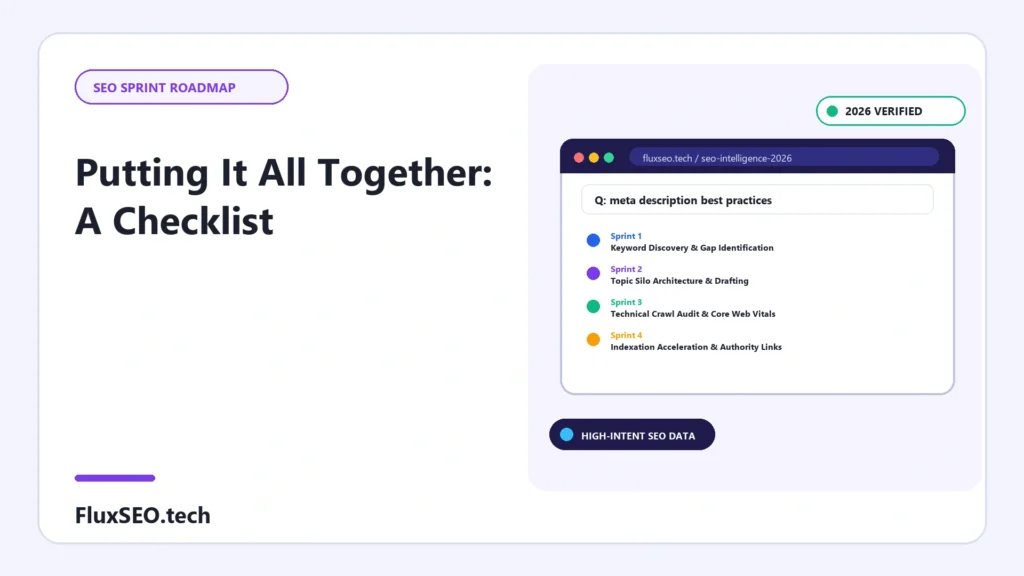
- Length: 120–155 characters for the core message, up to 180 if needed.
- Keyword: Include the primary term early and naturally.
- Benefit: State the user’s gain.
- CTA: Add an action verb and, if possible, a number or timeframe.
- Uniqueness: No duplicates across the site.
- Alignment: Mirror the page content and headline.
- Testing: Use Search Console to monitor CTR changes.
Apply this checklist to each page, and you should see a measurable lift in organic traffic over time.
Conclusion
Applying Meta Description Best Practices is a simple but powerful way to improve your site’s click‑through performance. By respecting length limits, writing for humans, using keywords naturally, and testing continuously, you turn every search impression into a potential visitor. Keep your snippets fresh, unique, and aligned with the page content, and let data guide your refinements.
FAQ
Frequently Asked Questions(FAQ)
What is a meta description?
A meta description is a short summary of a webpage that may appear beneath its title in search engine results. It helps users understand what the page offers and can encourage them to click.
What is a good example of a meta description?
A good meta description clearly summarizes the page, naturally includes the target keyword, and gives users a reason to click. For example: “Learn the latest meta description best practices to create compelling search snippets and improve your SEO click-through rates.”
What are the best practices for writing meta descriptions in 2026?
Write unique, accurate, and compelling descriptions that match the page content. Include relevant keywords naturally, use action-oriented language, and focus on giving searchers a clear reason to visit your page.
Is there a meta description generator?
Yes. Meta description generators can help create initial drafts based on your page topic or target keyword. However, you should review and edit the generated description to ensure it accurately represents the page and sounds natural.
What is the difference between a meta title and meta description in SEO?
A meta title is the main clickable title shown for a webpage in search results, while a meta description provides a short summary of the page. Both help searchers understand your content before they click.
FluxSEO’s Team creates practical, beginner-friendly guides on SEO, blogging, keyword research and digital growth. Our goal is to simplify search engine optimization and help website owners improve visibility, rankings and organic traffic with clear, actionable advice.