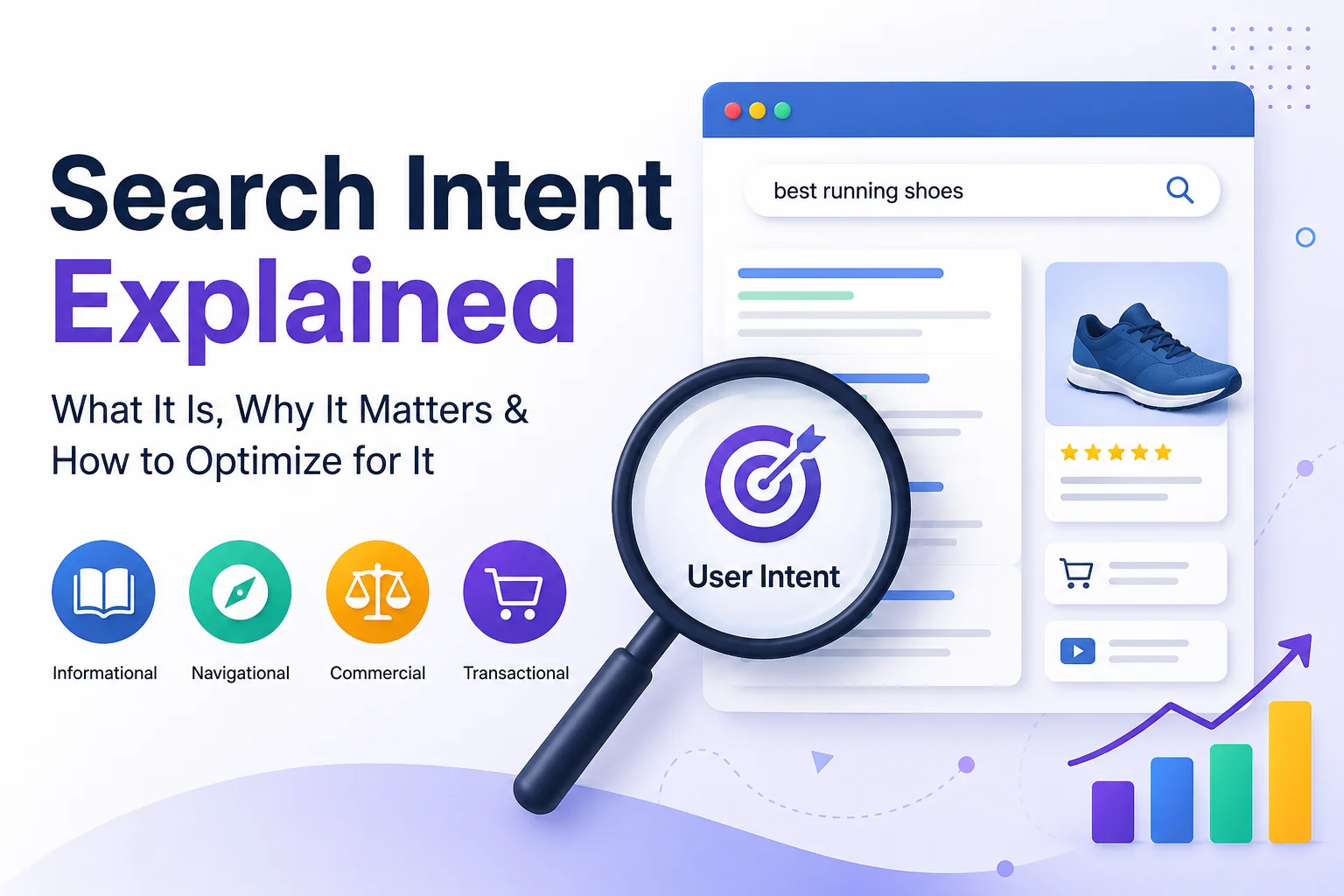
If you’ve ever put real effort into a blog post and watched it sit on page four of Google anyway, the problem probably isn’t your writing or your backlinks. It’s search intent. Search Intent Explained, in plain terms, is the reason behind a search — not the words someone typed, but what they were actually hoping to find when they typed them. Google built its entire ranking system around matching pages to that hidden reason, which is why intent has quietly become one of the most important concepts in SEO.
This guide walks through what search intent actually means, why it affects your rankings, the four main types you’ll run into, how to spot intent before you write a word, and how Google (along with AI Overviews, ChatGPT, Gemini, and Perplexity) figures out what a query really wants.
What Is Search Intent?
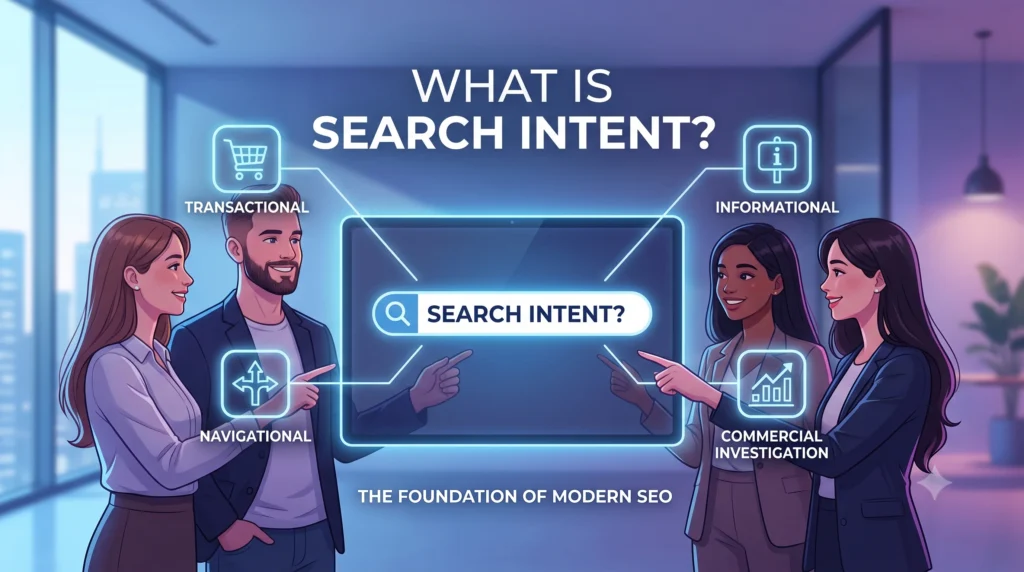
Search intent — sometimes called user intent or keyword intent — is the goal a person has in mind when they run a search. The query itself is just the surface. What matters is the purpose underneath it.
Take “best running shoes.” On the surface, it’s a product query. But the person typing it usually wants a comparison, not a single product page shoved in their face — they’re still deciding. Compare that to “how do running shoes work,” which is someone trying to understand something, not buy anything yet. Same general topic, completely different expectation.
This is why keyword research alone has never been enough. You first need to find the right keywords, then understand the intent behind them to create content that ranks. You can target the right words and still miss the mark if the content doesn’t match what the searcher actually needed. Google’s own quality guidelines lean heavily on this idea of “the need behind the query” when judging whether a page deserves to rank.
Why Search Intent Matters for SEO
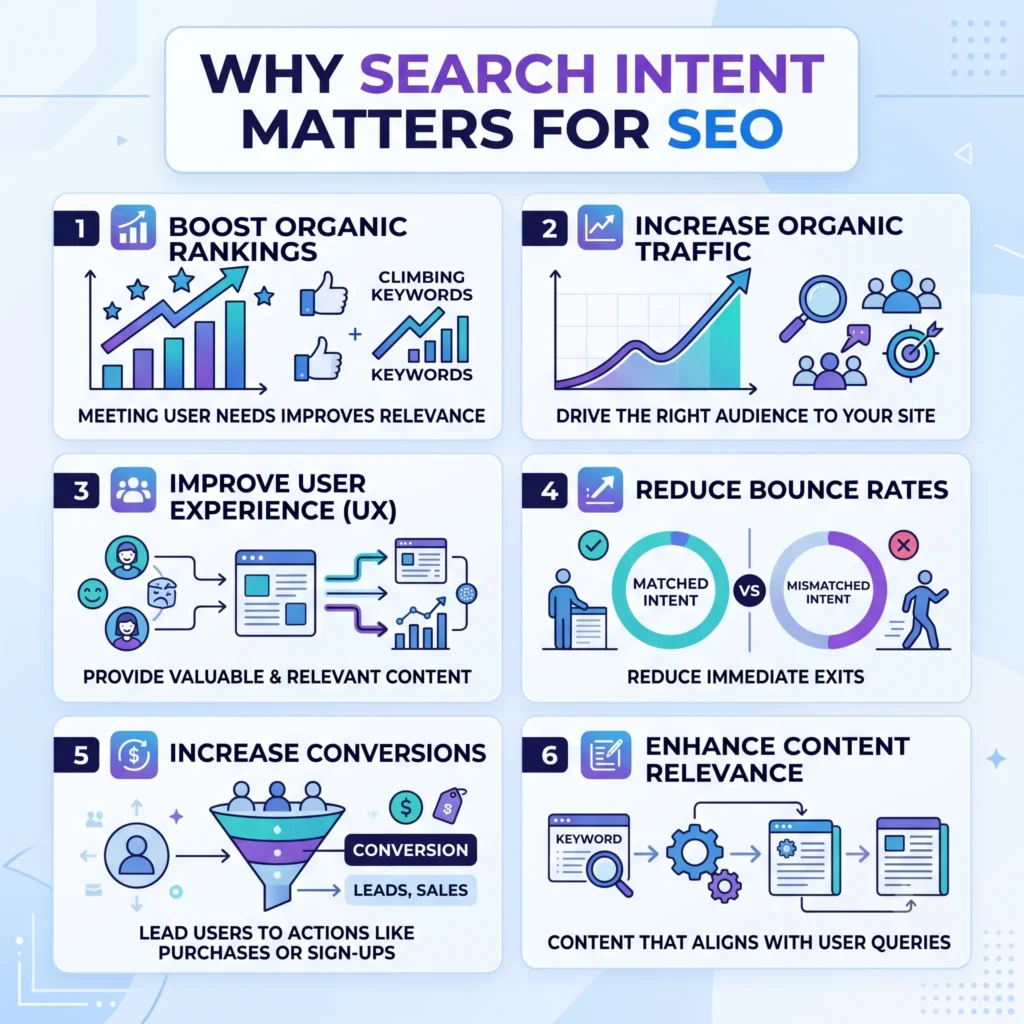
When content doesn’t match intent, Google usually won’t rank it well, even if it’s technically solid. A perfectly optimized product page will struggle against informational queries, and a long explainer article won’t outrank a comparison guide for someone ready to buy.
A few concrete reasons this matters:
Rankings depend on it. Google evaluates whether your format and depth line up with what similar top-ranking pages already deliver. Traffic depends on it too — content that matches intent earns clicks and holds attention, while mismatched content gets abandoned within seconds, which search engines notice. And conversions depend on it most of all: a reader in buying mode wants a decision made easier, not a 2,000-word history lesson.
There’s also a newer wrinkle. With AI Overviews and tools like Gemini and Perplexity answering simple questions directly on the results page, purely informational content is facing more competition for clicks than ever. Pages that go deeper than a quick answer — with examples, comparisons, or original insight — tend to hold their ground better.
The Four Main Types of Search Intent
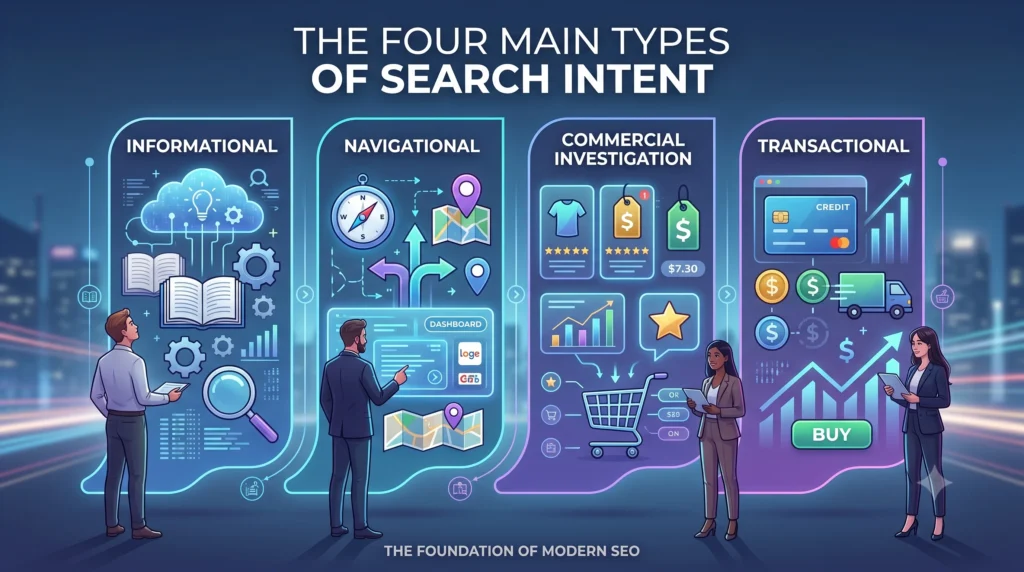
Nearly every query falls into one of four buckets.
Informational intent is someone trying to learn something — “what is search intent,” “how does SEO work.” This is blog post and guide territory.
Navigational intent means the person already knows where they want to go — “Semrush login” or “Ahrefs pricing.” No content will outrank the actual brand page here; you’re not competing, you’re just watching.
Commercial intent, sometimes called commercial investigation, is the research phase before a purchase — “best SEO tools 2026,” “Semrush vs Ahrefs.” Comparison articles and honest reviews win here.
Transactional intent is the moment someone’s ready to act — “buy Ahrefs subscription,” “download Yoast SEO.” This calls for a clean landing page or product page with an obvious next step.
Plenty of real queries don’t sit neatly in one category. A search like “best CRM software” often carries mixed intent — part research, part almost-ready-to-buy — and the content that wins usually blends education with a clear path to a decision.
How to Identify Search Intent Before You Write
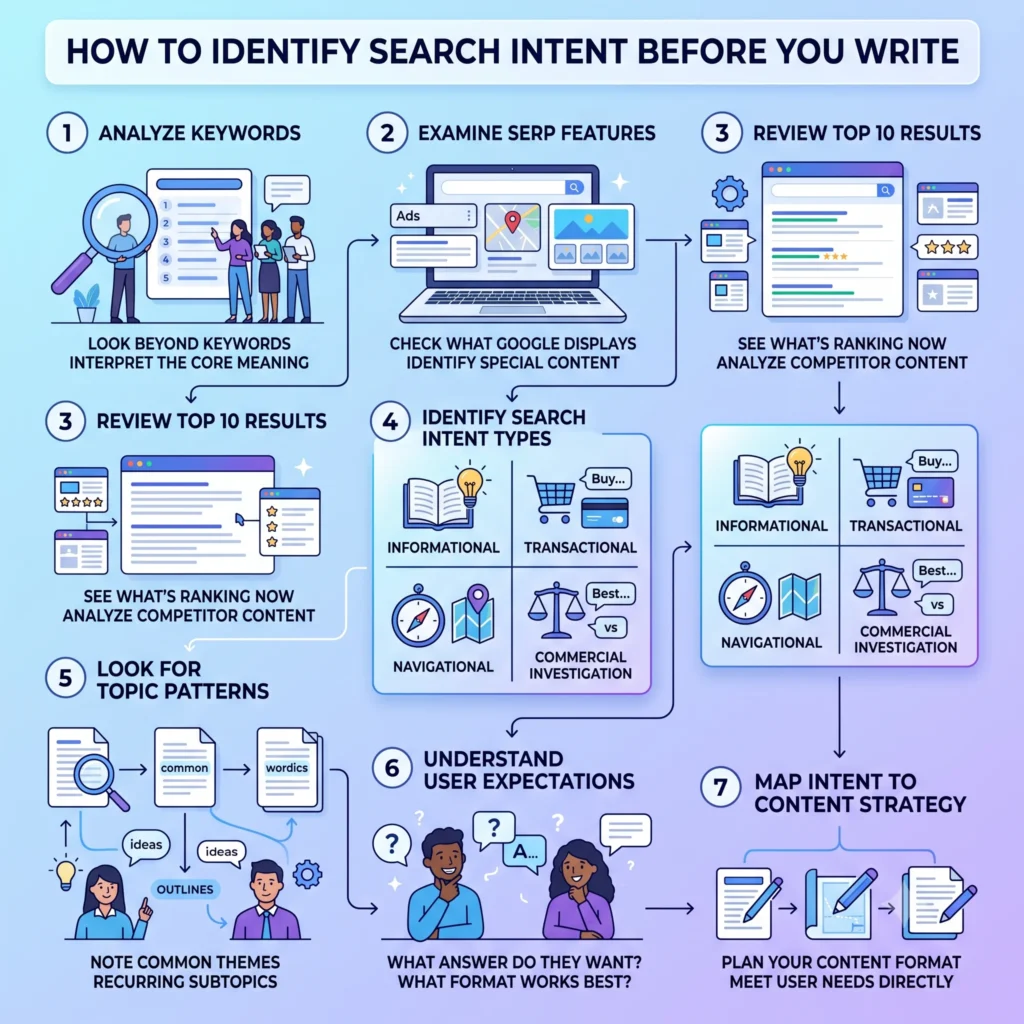
The fastest way to get this wrong is to guess. The fastest way to get it right is to just look at what’s already ranking.
Search the keyword yourself and see what Google shows. Before analyzing intent, it’s important to perform proper keyword research so you’re targeting queries your audience is actually searching for. If the results are mostly blog posts, that’s informational. If they’re mostly product or category pages, that’s transactional. Pay attention to the words in the query too — “best,” “vs,” “buy,” “how to,” and “near me” are all strong signals on their own.
It also helps to check what’s already working. Google Search Console will show you which queries are already sending traffic to similar pages on your site, which tells you a lot about real search behavior rather than assumptions. Featured snippets are another clue — whether Google pulls a list, a table, or a paragraph tells you what format searchers expect. And the “People Also Ask” box is basically Google handing you a list of related sub-intents for free.
How Google Actually Understands Intent
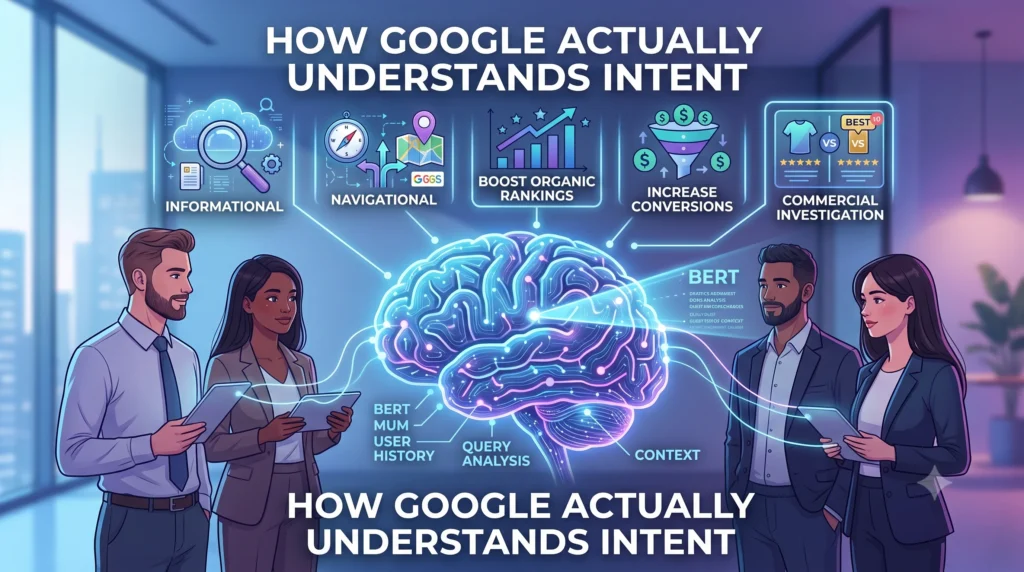
Google isn’t matching exact words anymore — it hasn’t been for years. Through natural language processing systems like BERT and MUM, it interprets the relationship between words and the likely meaning behind a phrase, not just the phrase itself.
That’s part of why AI Overviews can now answer a simple factual query directly on the search page without sending anyone to a website — the intent behind “what is search intent” is straightforward enough that Google can resolve it on the spot. More complex or decision-heavy queries, especially anything involving commercial investigation or transactional intent, still send searchers to full pages, because that’s where the nuance actually lives.
Google’s Search Quality Evaluator Guidelines make this explicit: human raters are trained to judge whether a page satisfies the need behind a query, not just whether it contains the right terms.
How to Optimize Content for Search Intent
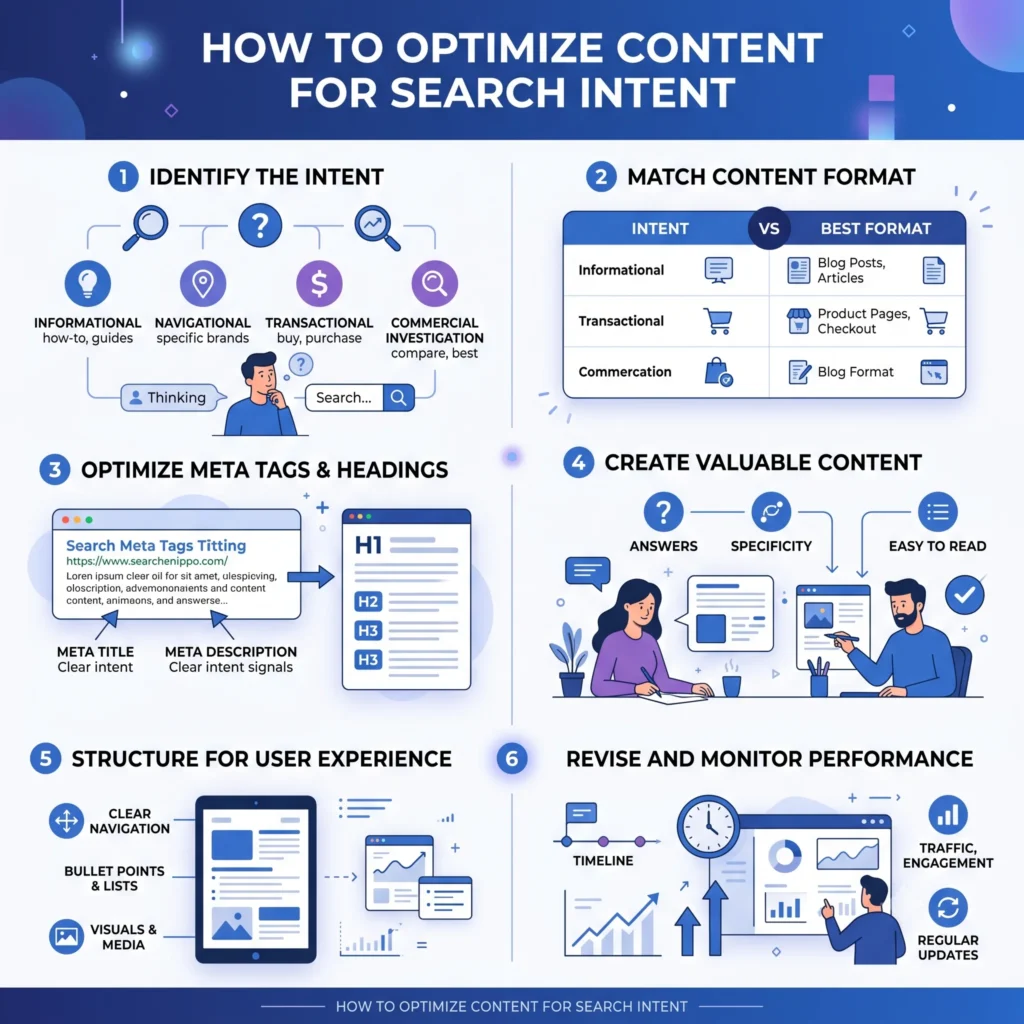
Once you know the intent, the content decisions mostly make themselves. Write a how-to guide for informational intent. Build a comparison piece for commercial intent. Keep it short and action-focused for transactional intent.
Beyond format, look closely at what’s already ranking before you write — if every top result has a comparison table, don’t publish a plain list and expect to compete. Answer the main question early rather than burying it under three paragraphs of introduction; this matters even more now that AI Overviews tend to pull from whichever page gets to the point fastest. Round it out with an FAQ section, real examples, and enough depth to show you actually know the subject — that’s the E-E-A-T piece Google keeps talking about. And don’t ignore the boring stuff: a slow, cluttered page will lose readers even when the content itself is right.
Mistakes People Make With Search Intent
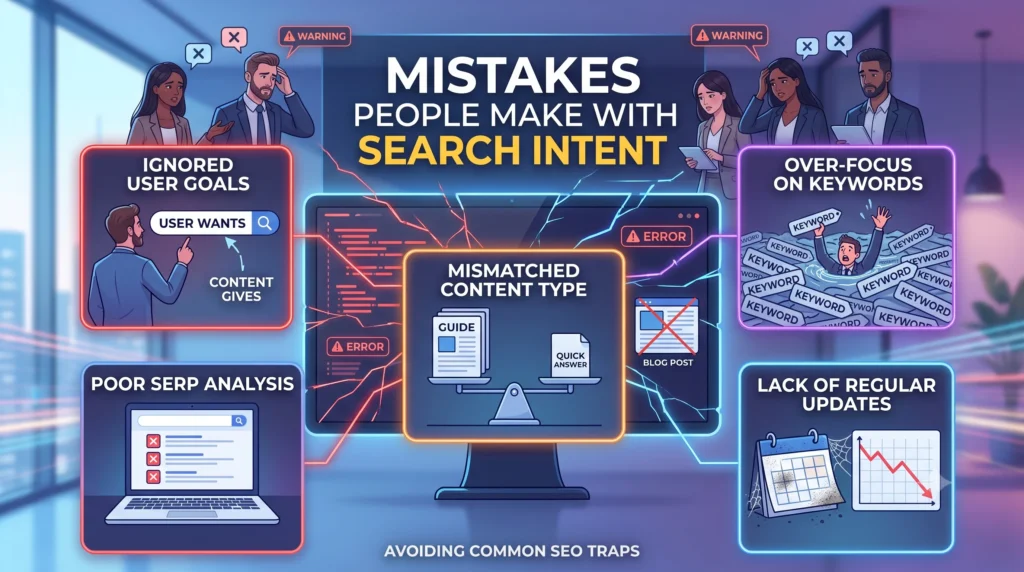
The most common one is skipping the research step and just assuming intent based on the keyword alone. A close second is picking the wrong format entirely — putting a product page in front of someone who’s still just trying to understand a concept.
Keyword stuffing is still a problem too, even though most writers know better by now — repeating a phrase mechanically doesn’t fool anyone, human or algorithm. Mixed intent gets missed a lot as well, with writers forcing a query into one category when it really needs a blend. And search behavior shifts over time, so content that matched intent perfectly two years ago can quietly drift out of alignment if nobody revisits it.
A Few Real Examples
“What is search intent” is purely informational — people want an explanation, so a guide or blog post fits. “Ahrefs login” is navigational; nothing beats sending someone straight to the brand’s own page. “Best keyword research tools” sits in commercial territory, where a comparison article outperforms almost anything else. And “buy Semrush subscription” is transactional — a fast, clear landing page is what actually gets used here, not another long article.
Tools Worth Using for Intent Research
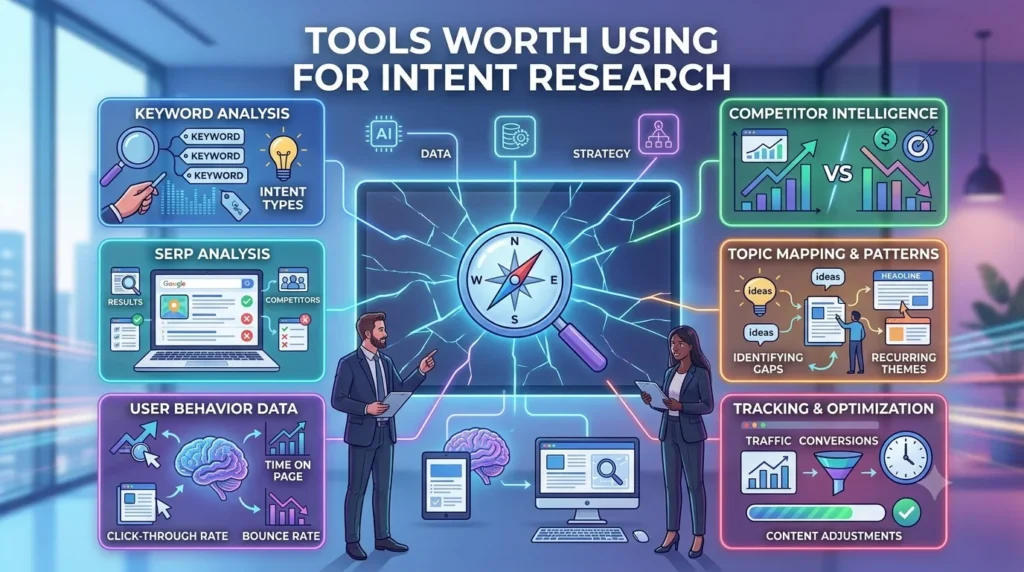
Semrush and Ahrefs both label keyword intent directly in their keyword research tools, which saves a lot of guesswork. Moz’s keyword explorer does something similar, and Yoast SEO helps once you’re actually writing, nudging you toward on-page choices that fit. Google Keyword Planner and Google Trends won’t tell you intent outright, but they’re useful for spotting volume shifts and seasonal patterns that hint at how a query’s purpose is changing.
For more on how intent ties into ranking factors specifically, Moz’s guide to search intent is a solid deeper read, and Google’s own guidance on creating helpful content is worth reading straight from the source rather than through a summary. If you want to see exactly how Google trains human raters to judge intent match, the Search Quality Evaluator Guidelines PDF is public and surprisingly readable. And Google Search Console is free and probably the single best source of real intent data you already have access to.
Final Thought
Search Intent Explained really comes down to one idea: Google isn’t ranking words, it’s ranking whether a page actually solves the problem someone had when they searched. Spend less time chasing keyword density and more time checking what real searchers expect to find — the rankings tend to follow.
Frequently Asked Questions
What is search intent in SEO?
It’s the purpose behind a search query — informational, navigational, commercial, or transactional — and it’s a major factor in what Google chooses to rank.
How do I identify search intent quickly?
Search the keyword yourself and look at what’s already ranking. The format Google favors — guides, comparisons, product pages — tells you almost everything.
What are the four types of search intent?
Informational, navigational, commercial, and transactional.
Why does understanding search intent matter so much right now?
Because content that ignores intent struggles to rank no matter how well it’s written, and that gap has only gotten more obvious with AI Overviews changing how simple queries get answered.
Can a single keyword have more than one intent?
Yes — plenty of queries mix research and buying intent, and the content that wins usually reflects both.
FluxSEO’s Team creates practical, beginner-friendly guides on SEO, blogging, keyword research and digital growth. Our goal is to simplify search engine optimization and help website owners improve visibility, rankings and organic traffic with clear, actionable advice.