If you’ve spent any time researching SEO, you’ve probably heard that “content is king.” That’s true, but content alone rarely ranks on its own. The other half of the equation is link building — the process of earning links from other websites that point back to yours.
Link building remains one of the strongest ranking signals Google uses to understand which pages deserve to rank higher in search results. Done correctly, it builds website authority, drives referral traffic, and helps search engines trust your content. Done poorly, it can trigger penalties and hurt the site you’re trying to grow.
This guide breaks down everything you need to know about link building—from the fundamentals to advanced 2026 strategies—so you can build a backlink profile that actually moves the needle for your SEO performance. If you’re new to search optimization, start with our SEO Basics guide before diving into advanced link building strategies.
What Is Link Building in SEO?
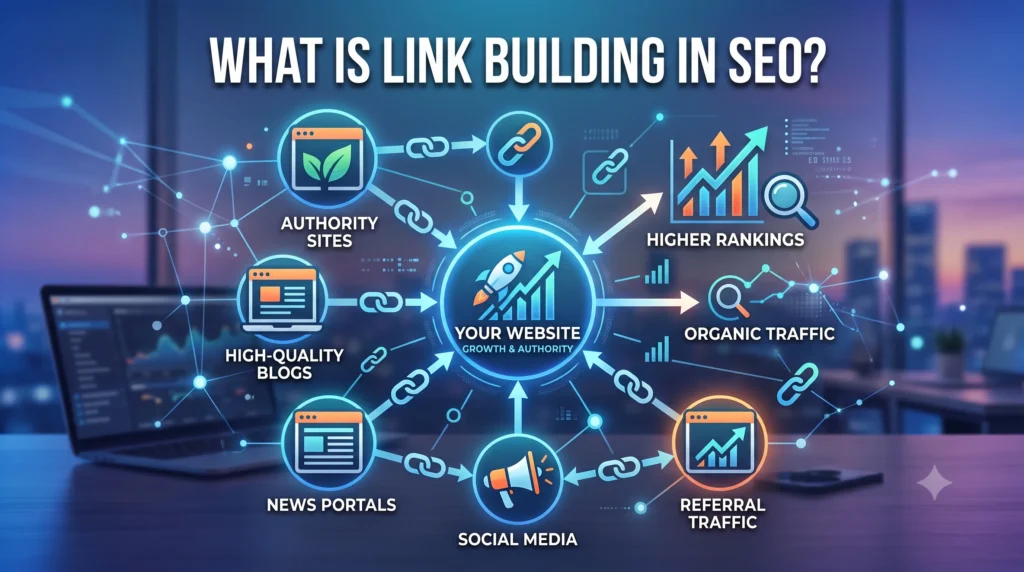
Link building is the practice of acquiring hyperlinks, also known as backlinks, from other websites that point to pages on your own site. In SEO terms, a backlink acts as a vote of confidence: when an authoritative or relevant website links to your content, it signals to search engines that your page offers something valuable.
Link building SEO isn’t just about collecting as many links as possible. Modern link building is about earning inbound links from credible, topically relevant sources that genuinely improve your site’s trust and authority. If you’re still learning the fundamentals, read our Beginner’s Guide to SEO first.
Why Is Link Building Important for Search Rankings?
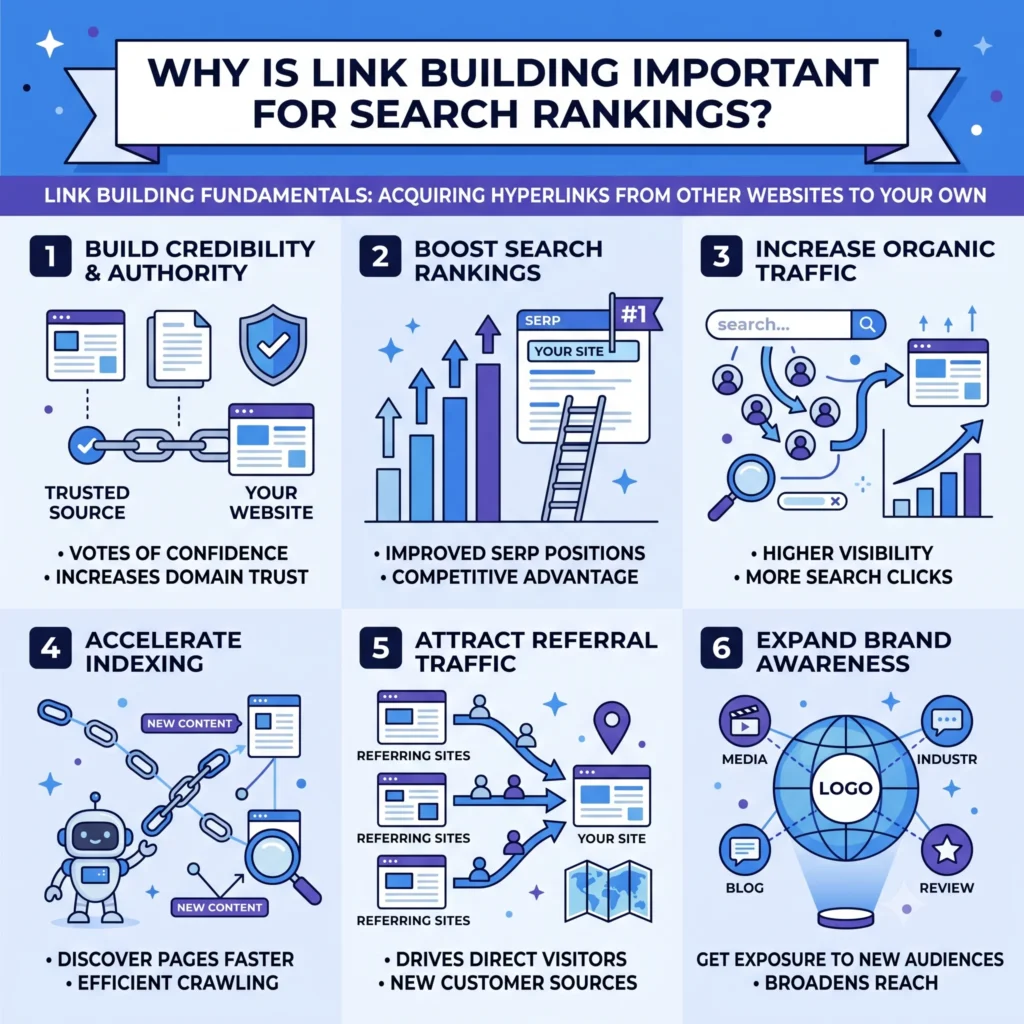
Backlinks remain one of Google’s core ranking factors because they help search engines evaluate two things: authority and relevance. When multiple authoritative websites link to your content, it suggests your page is a trustworthy source worth surfacing to searchers.
Beyond rankings, a solid link building strategy delivers several additional benefits. Before focusing on backlinks, it’s important to understand the SEO fundamentals that influence rankings.
- Referral traffic — visitors clicking through from other sites
- Faster indexing and crawlability — search engine bots discover new pages through links
- Brand visibility and credibility — appearing on respected sites builds trust
- Topical authority — consistent links from niche-relevant sites reinforce your expertise
Search visibility today is also shaped by AI-driven answer engines. Tools like ChatGPT, Gemini, and Perplexity often pull from well-cited, authoritative content, which makes earning genuine backlinks and brand mentions even more valuable going into 2026.
How Search Engines Evaluate Backlinks
Google’s algorithm has evolved significantly since the original PageRank model, which used the concept of “link equity” (informally called “link juice”) passed between pages through links. While PageRank as a public metric is gone, the underlying idea still exists: links distribute trust and authority across the web.
Modern algorithm updates — including the Google Penguin update and various Link Spam Update rollouts — were specifically designed to devalue manipulative link schemes and reward natural, editorially earned links. Google’s official spam policies flag link schemes as behavior that can negatively impact a site’s ranking in Google Search results, including buying or selling links that pass ranking credit.
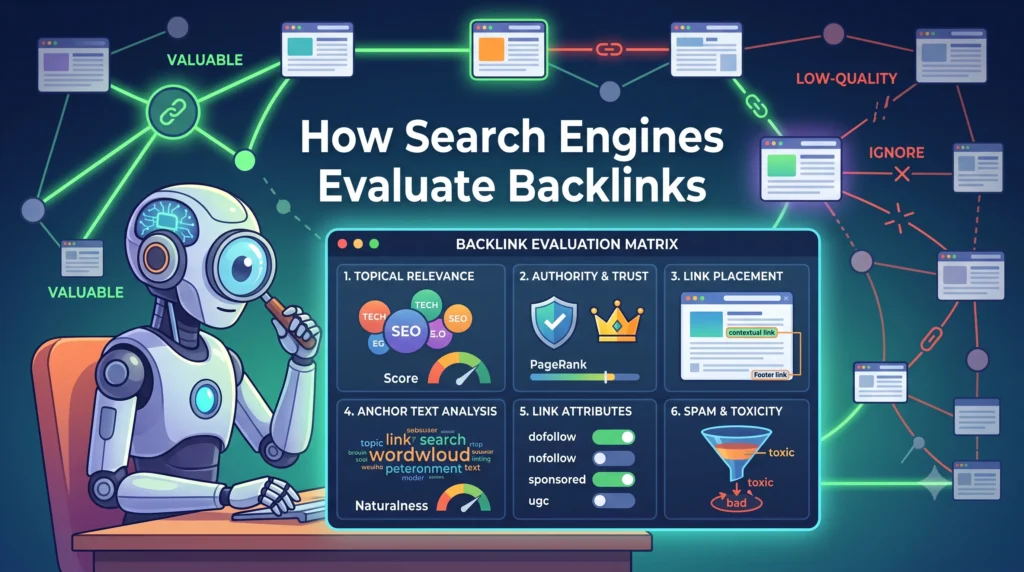
Search engines now evaluate backlinks using signals such as:
- The linking domain’s authority and trustworthiness
- Topical relevance between the linking site and your content
- Anchor text used in the link
- Where on the page the link appears
- Whether the link is dofollow or nofollow
- The overall pattern and diversity of your backlink profile
Google’s E-E-A-T framework (Experience, Expertise, Authoritativeness, Trustworthiness) also plays a role here — backlinks from credible, experienced sources reinforce a site’s authoritativeness, which is one of the pillars Google’s quality raters use to assess content.
What Makes a High-Quality Backlink?
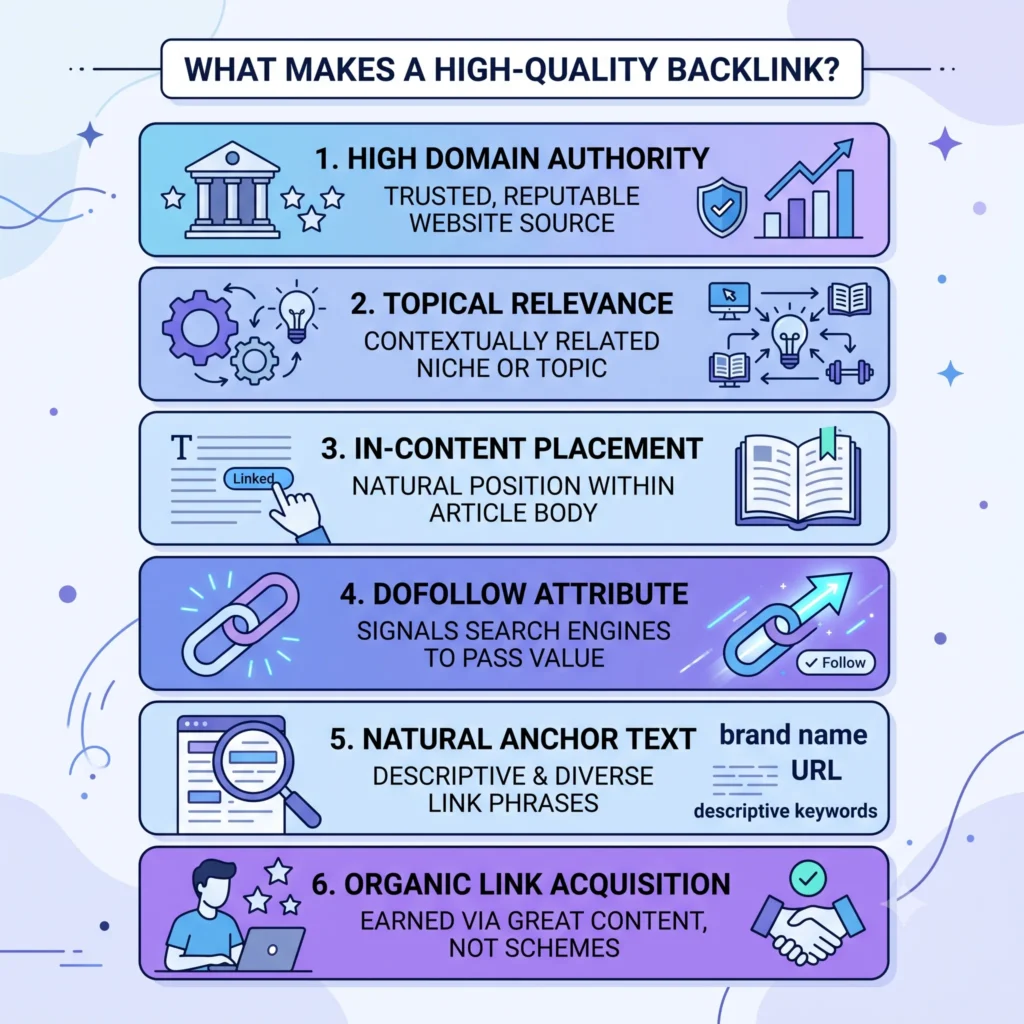
Not all backlinks are created equal. A single link from a respected, relevant publication can outweigh dozens of low-value links. Here’s what separates high-quality backlinks from the rest.
Authority
Authority refers to how trusted and established the linking website is. Metrics like Domain Rating (DR) from Ahrefs, Domain Authority (DA) from Moz, Authority Score from Semrush, and Trust Flow/Citation Flow from Majestic are commonly used to estimate this. Links from high-authority sites like BBC, Adobe, or Microsoft naturally carry more weight than links from brand-new, low-trust domains.
Relevance
A backlink is more valuable when it comes from a site within your niche or industry. A link about hiking gear from a travel publication like Lonely Planet is far more meaningful than the same link from an unrelated finance blog. Niche relevance strengthens topical authority.
Anchor Text
Anchor text is the clickable, visible text of a hyperlink. Natural, varied anchor text (brand names, partial matches, generic phrases like “click here” or “read more”) looks organic. Over-optimized, exact-match anchor text repeated across many links is a red flag for manipulation.
Link Placement
Contextual links embedded naturally within the body content of an article carry more value than links buried in footers, sidebars, or author bios. Editorial links placed within relevant, in-depth content tend to perform best.
Follow vs. Nofollow Links
Dofollow backlinks pass link equity and directly influence rankings. Nofollow backlinks, sponsored links, and UGC (user-generated content) links include HTML attributes that tell search engines not to pass ranking credit — though Google has clarified it may still use them as “hints.” A natural backlink profile includes a healthy mix of both.
Types of Backlinks You Should Know
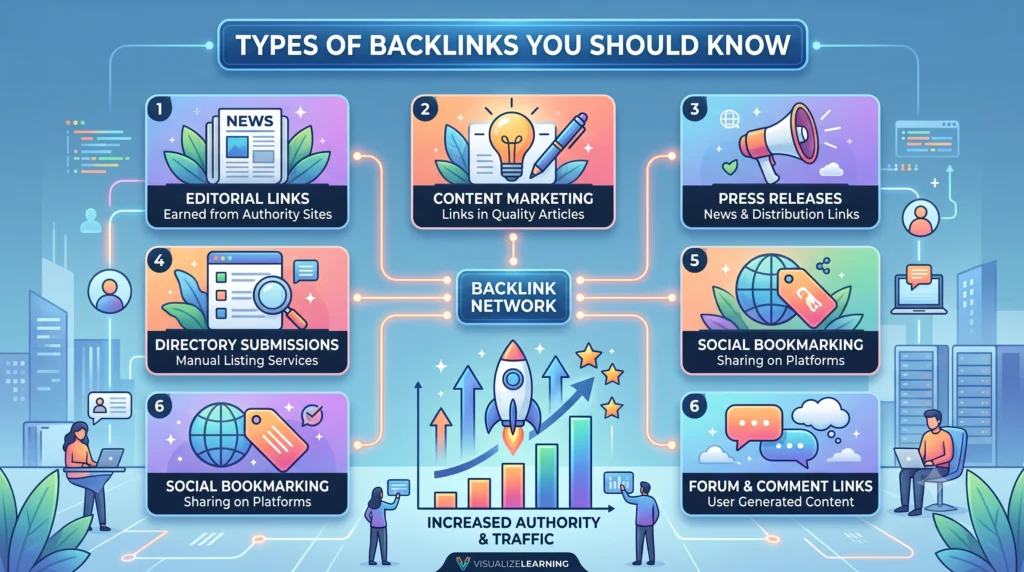
- Editorial backlinks – earned naturally because your content is genuinely useful
- Guest post links – acquired by contributing articles to other websites
- Resource/citation links – links from “best tools” or resource pages
- Directory links – listings in niche or business directories
- Broken link replacements – earned by fixing dead links on other sites
- Digital PR/news links – gained through media coverage and press mentions
- Forum and community links – links from platforms like Reddit or Quora
- Social and brand mention links – unlinked or linked mentions of your brand
White Hat vs. Black Hat Link Building
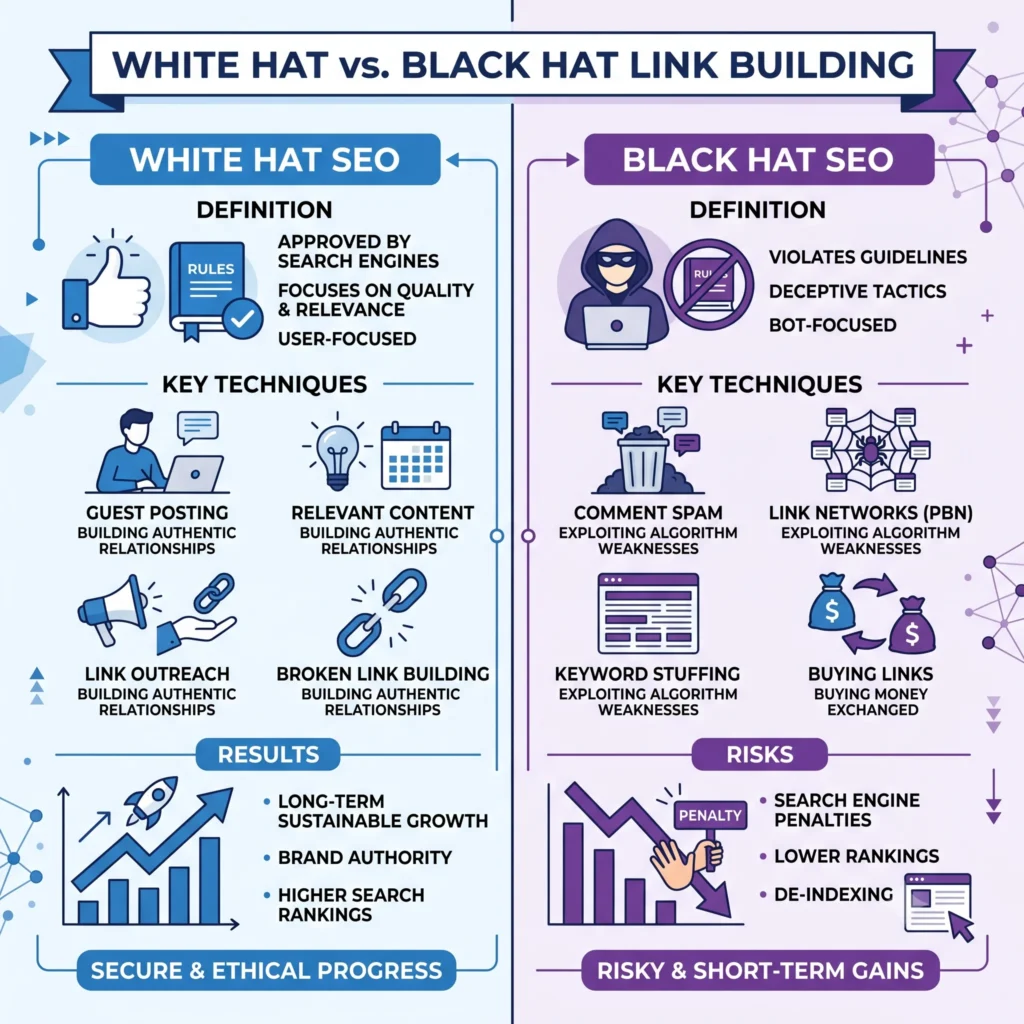
White hat link building follows Google’s guidelines and focuses on earning links through valuable content, outreach, and genuine relationships. It’s slower but sustainable and safe long-term.
Black hat link building relies on manipulative tactics — buying links, using private blog networks (PBNs), automated link schemes, or spammy comment links — to game rankings quickly. These tactics violate Google Search’s spam policies and put your site at risk of manual penalties or algorithmic suppression after updates like the Link Spam Update.
For beginners, the safest long-term path is always white hat link building — it protects your site while building durable authority.
How to Build High-Quality Backlinks (Step-by-Step)
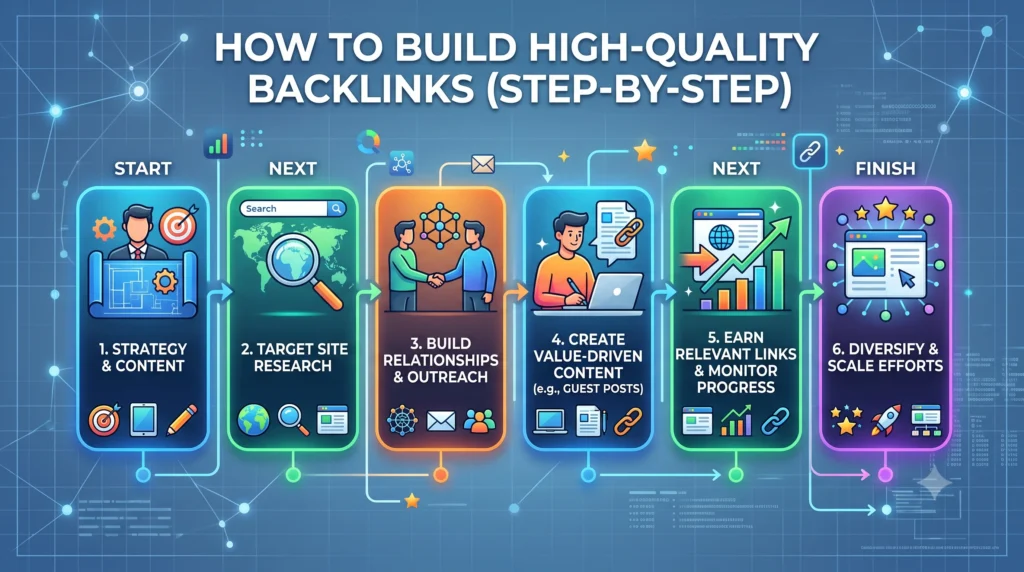
- Create linkable assets — original research, data studies, in-depth guides, tools, or templates that people naturally want to reference.
- Identify link targets — find websites relevant to your niche that already link to similar content.
- Personalize your outreach — send tailored emails explaining why your resource adds value to their readers.
- Offer something in return — a quote, data, or a reciprocal resource (not a paid exchange).
- Follow up strategically — one or two polite follow-ups often make the difference.
- Track and maintain relationships — link building is easier when you nurture ongoing industry connections.
- Monitor your backlink profile — regularly audit new links to ensure quality and disavow harmful ones if necessary.
Best Link Building Strategies That Actually Work in 2026
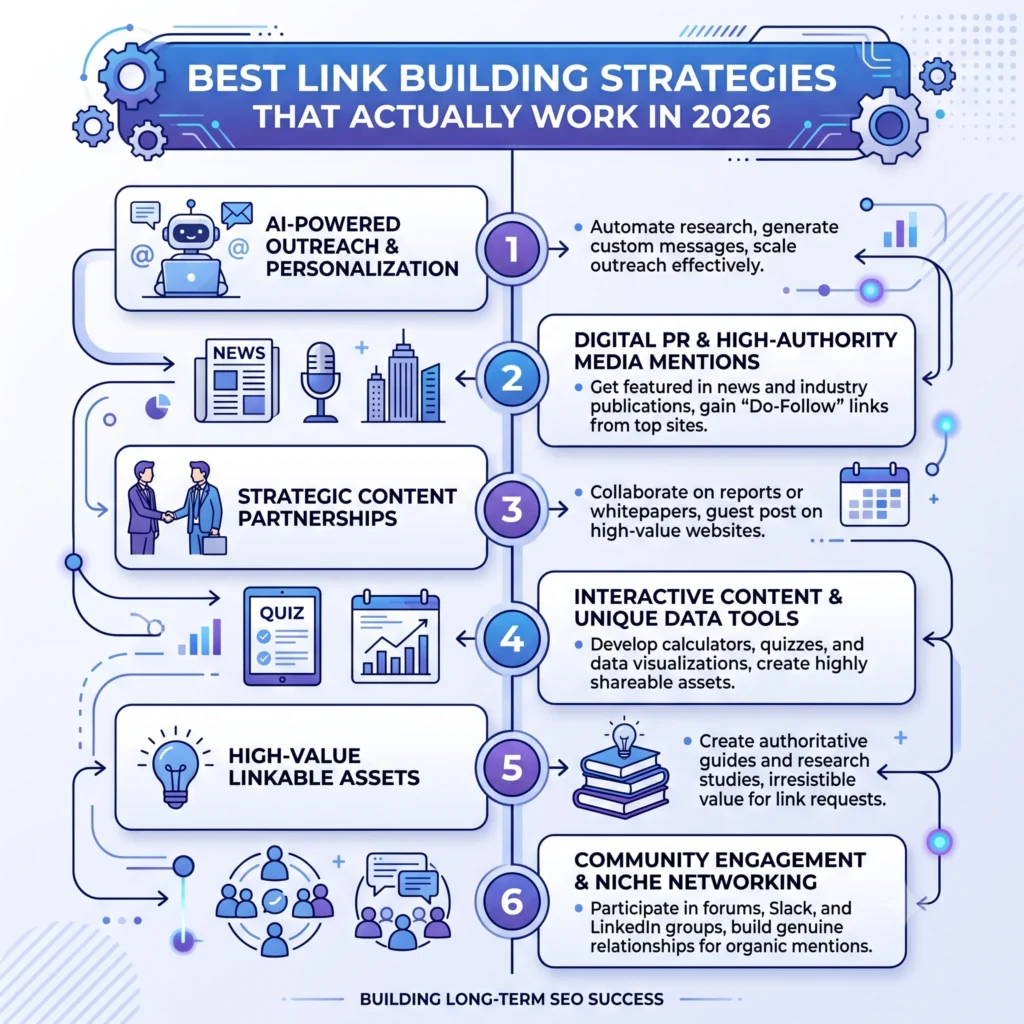
- Digital PR – Earn coverage and backlinks by pitching data-driven stories to journalists and publications.
- HARO/Connectively-style outreach – Respond to journalist queries on platforms like Connectively (the platform that replaced HARO) to earn authority backlinks from major publications
- Guest posting – Contribute high-quality articles to reputable, relevant blogs in exchange for a contextual link.
- Broken link building – Find dead links on authority sites and suggest your content as a replacement.
- Skyscraper technique – Improve on top-ranking content, then reach out to sites linking to the original.
- Linkable asset creation – Publish original studies, statistics, or free tools that naturally attract citations.
- Competitor backlink replication – Identify where competitors earn links and pursue similar opportunities.
- Unlinked brand mention reclamation – Ask sites that mention your brand without a link to add one.
- Internal linking optimization – While not a backlink tactic, strong internal linking helps distribute link equity across your site and supports the pages you’re building links to. Learn more about this in our SEO Basics guide.
Link Building Mistakes to Avoid
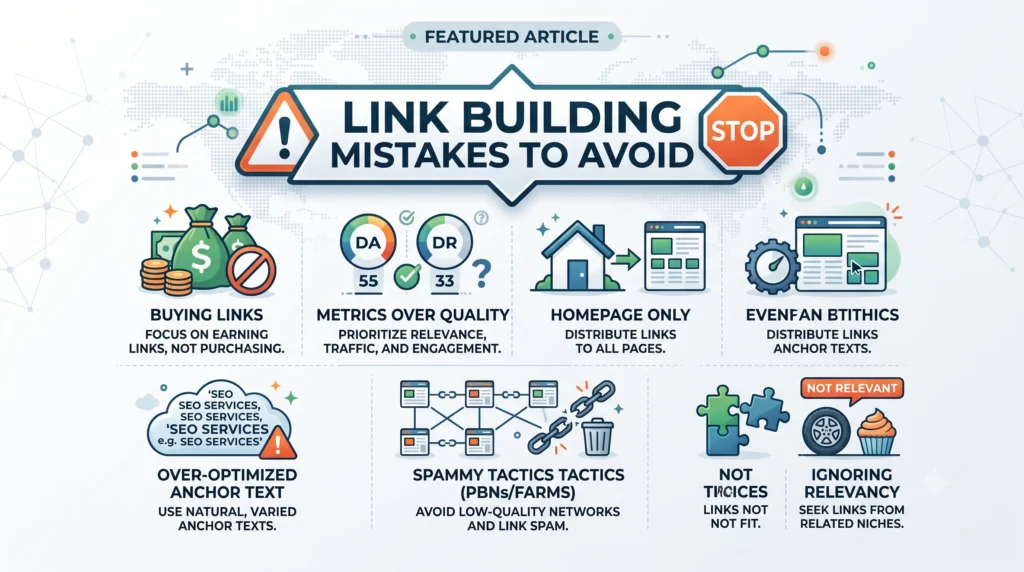
- Buying links or participating in link schemes
- Over-optimizing anchor text with exact-match keywords
- Chasing link volume over relevance and authority
- Ignoring topical relevance between linking and target sites
- Using low-quality directories or spun/duplicate guest posts
- Failing to diversify your backlink profile
- Never auditing or cleaning up toxic backlinks
How to Find Link Building Opportunities
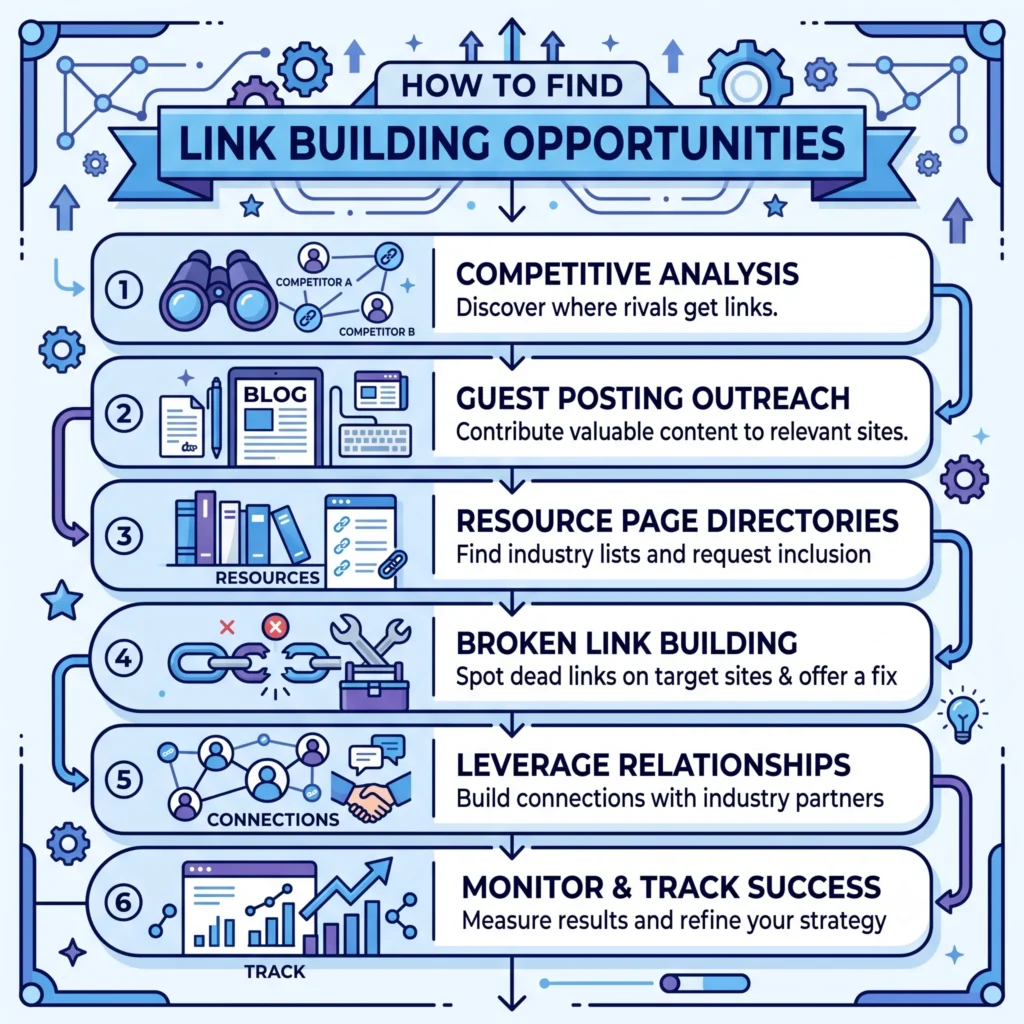
- Analyze competitor backlinks using tools like Ahrefs or Semrush
- Search for “write for us,” “guest post,” or “resources” pages in your niche
- Monitor brand mentions using Google Alerts or dedicated monitoring tools
- Look for broken links on authority sites within your industry
- Join niche communities on Reddit and Quora to build genuine visibility
- Watch journalist requests on Connectively for digital PR opportunities
How to Analyze Competitor Backlinks
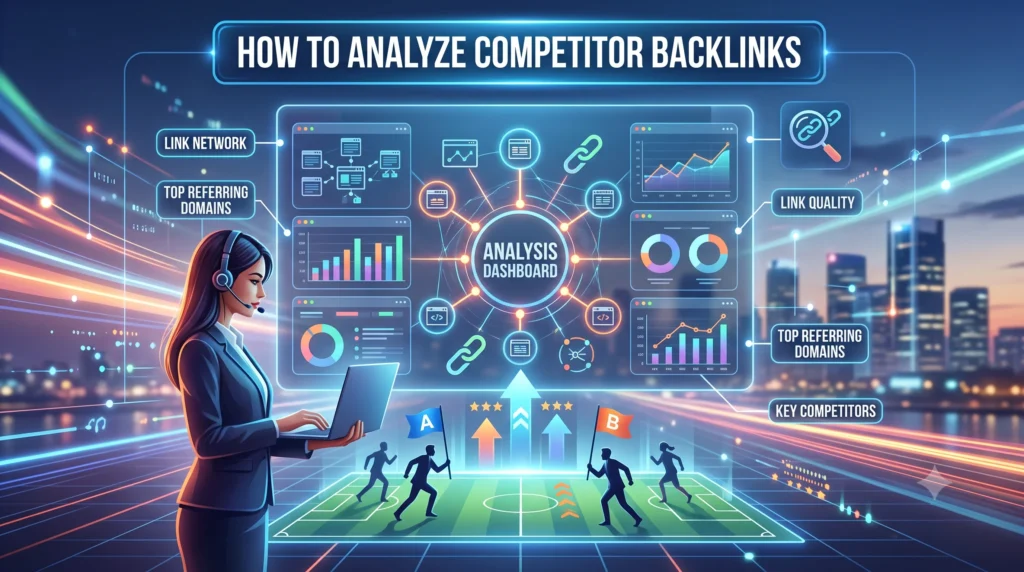
A backlink gap analysis reveals which domains link to your competitors but not to you — these are often your best outreach targets. To perform one:
- Pull your top competitors’ backlink profiles using Ahrefs, Semrush, or Moz.
- Filter for referring domains with strong authority and topical relevance.
- Cross-reference against your own existing backlink profile to find gaps.
- Prioritize opportunities where you can offer equal or better content.
- Build targeted outreach lists based on these findings.
This kind of competitor analysis helps you replicate what’s already working in your niche instead of guessing.
How to Measure Link Building Success
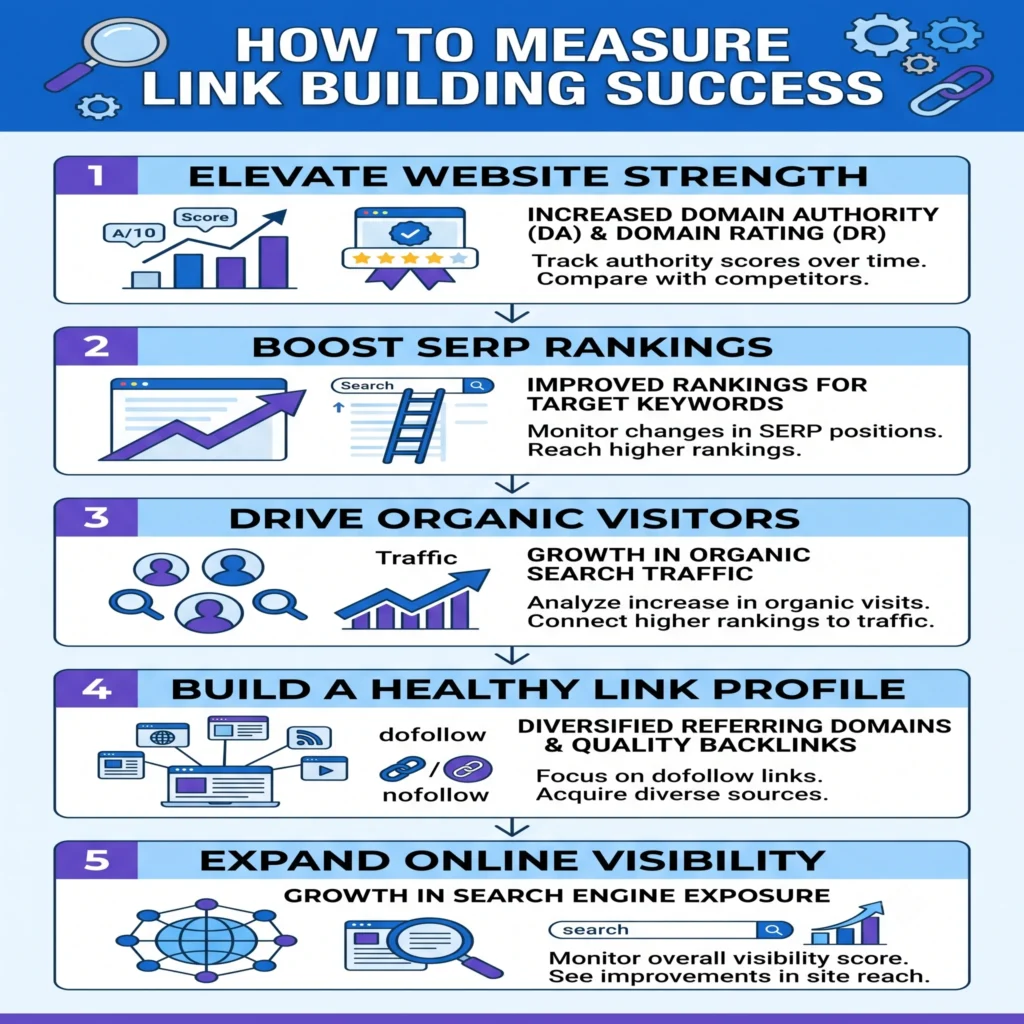
Track these key metrics to evaluate your link building strategy:
- Referring domains – the number of unique websites linking to you
- Domain Rating/Domain Authority growth – overall authority trend over time
- Organic traffic and keyword rankings – the real-world SEO impact
- Referral traffic – visits coming directly from backlinks
- Anchor text distribution – ensuring a natural, varied profile
- Toxic link ratio – percentage of low-quality or spammy links
Google Search Console is essential here — its Links report shows your top linked pages and linking sites directly from Google’s own index.
Best Link Building Tools
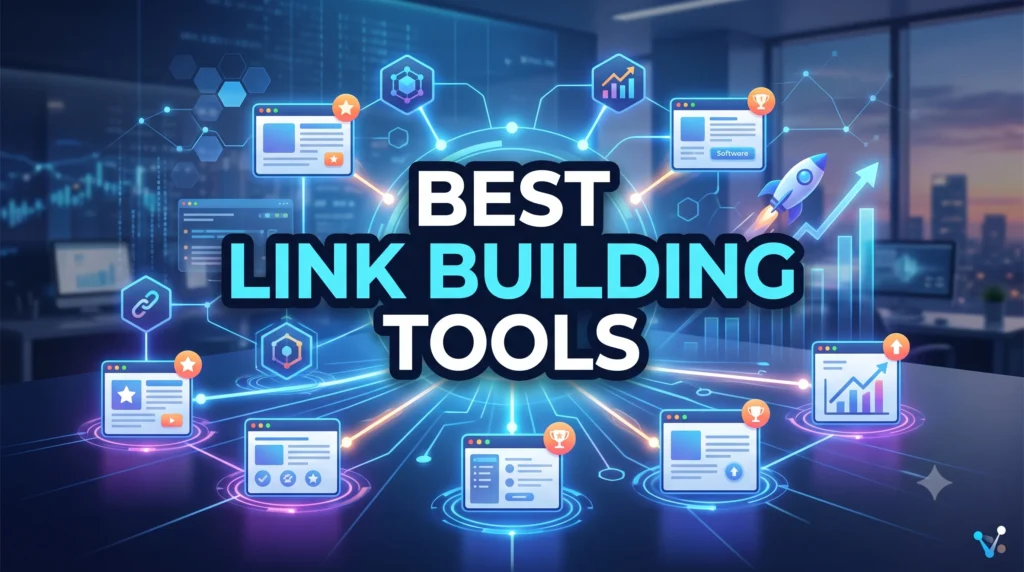
- Ahrefs– backlink analysis, competitor research, content gap tools
- Semrush – backlink audit, link building toolkit, Authority Score
- Moz – Domain Authority, Page Authority, Link Explorer
- Majestic – Trust Flow and Citation Flow metrics
- Google Search Console – free first-party backlink and indexing data
- Connectively – journalist outreach for digital PR-driven backlinks
Link Building Trends and the Future of SEO
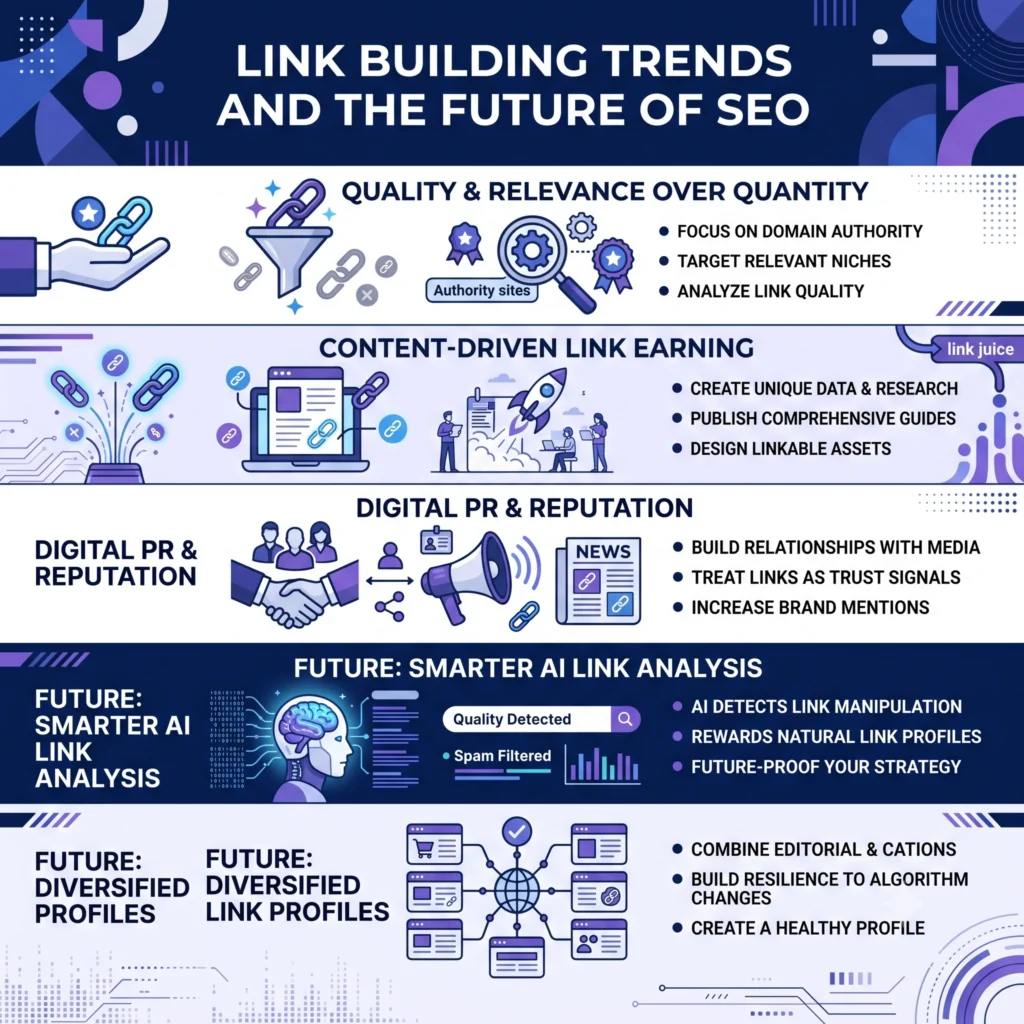
Link building in 2026 is shifting toward quality over quantity. As Google’s algorithm and AI Overviews get better at detecting manipulative patterns, natural, editorially earned backlinks matter more than ever. AI-generated search experiences — from Google’s AI Overviews to ChatGPT and Perplexity — increasingly cite well-linked, authoritative, and well-structured content, meaning strong backlink profiles now influence visibility beyond traditional search results too.
Digital PR, original research, and brand mentions (even unlinked ones) are becoming more important as search engines get better at understanding entity-based authority — not just links, but overall brand presence across the web.
Link Building Checklist (Quick Summary)
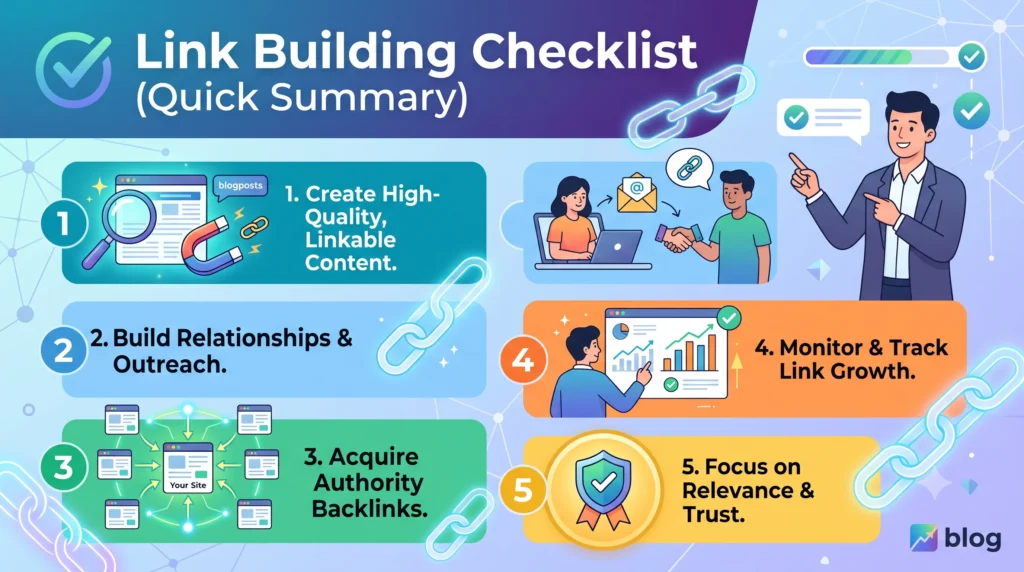
- Create genuinely valuable, linkable content
- Prioritize relevance and authority over link volume
- Use natural, varied anchor text
- Mix dofollow and nofollow links naturally
- Run regular backlink audits
- Analyze competitor backlink gaps
- Pursue digital PR and outreach opportunities
- Monitor referring domains and referral traffic
- Avoid black hat tactics and link schemes
- Track results in Google Search Console
Conclusion
Link building isn’t about shortcuts — it’s about consistently earning trust from relevant, authoritative sites through valuable content and genuine outreach. Whether you’re just starting with link building for beginners or refining an advanced backlink strategy, the principles stay the same: prioritize relevance, authority, and natural growth over volume and manipulation.
Focus on creating linkable assets, building real relationships through outreach, and monitoring your backlink profile with tools like Ahrefs, Semrush, Moz, and Google Search Console. If you’re just getting started, our complete SEO guide will help you build a strong foundation before moving on to advanced link building.
Frequently Asked Questions (FAQ)
What is link building in simple terms?
Link building is the process of earning backlinks from other websites to increase your site’s authority, rankings, and organic traffic.
Is link building still important in 2026?
Yes. High-quality backlinks remain a key ranking factor for Google and help improve visibility in AI-powered search results.
How many backlinks do I need to rank?
There is no fixed number—relevant, authoritative backlinks are far more valuable than a large number of low-quality links.
What’s the difference between dofollow and nofollow backlinks?
Dofollow backlinks pass SEO value, while nofollow links mainly drive referral traffic and brand exposure.
Is guest posting still an effective link building strategy?
Yes. Guest posting works well when you publish valuable content on reputable, niche-relevant websites.
FluxSEO’s Team creates practical, beginner-friendly guides on SEO, blogging, keyword research and digital growth. Our goal is to simplify search engine optimization and help website owners improve visibility, rankings and organic traffic with clear, actionable advice.