If you’ve ever searched for blogging tips hoping to find a guide that actually works, you’re in the right place. Blogging isn’t dead — it’s just more competitive, and that means the bloggers who understand strategy, not just typing words into a text box, are the ones winning.
This guide brings together blogging tips for beginners, professional blogging tips, and advanced blogging strategies so you can go from a blank page to a blog that earns trust, traffic, and income. Whether you’re starting from zero or trying to fix a stalled blog, these blogging best practices will give you a clear, honest roadmap.
What Are Blogging Tips?

Blogging tips are practical, tested pieces of advice that help you plan, write, optimize, promote, and monetize a blog more effectively. Good blogging advice covers everything from choosing a niche and writing helpful content, to technical SEO, audience building, and turning readers into subscribers or customers.
The best blogging guide doesn’t just tell you to “write good content.” It shows you how—how to research keywords, structure a post for readability, satisfy search intent, and build the kind of authority that Google (and readers) trust. If you’re new to search optimization, our SEO Basics guide explains the core principles behind these strategies.
Why Blogging Still Matters in 2026
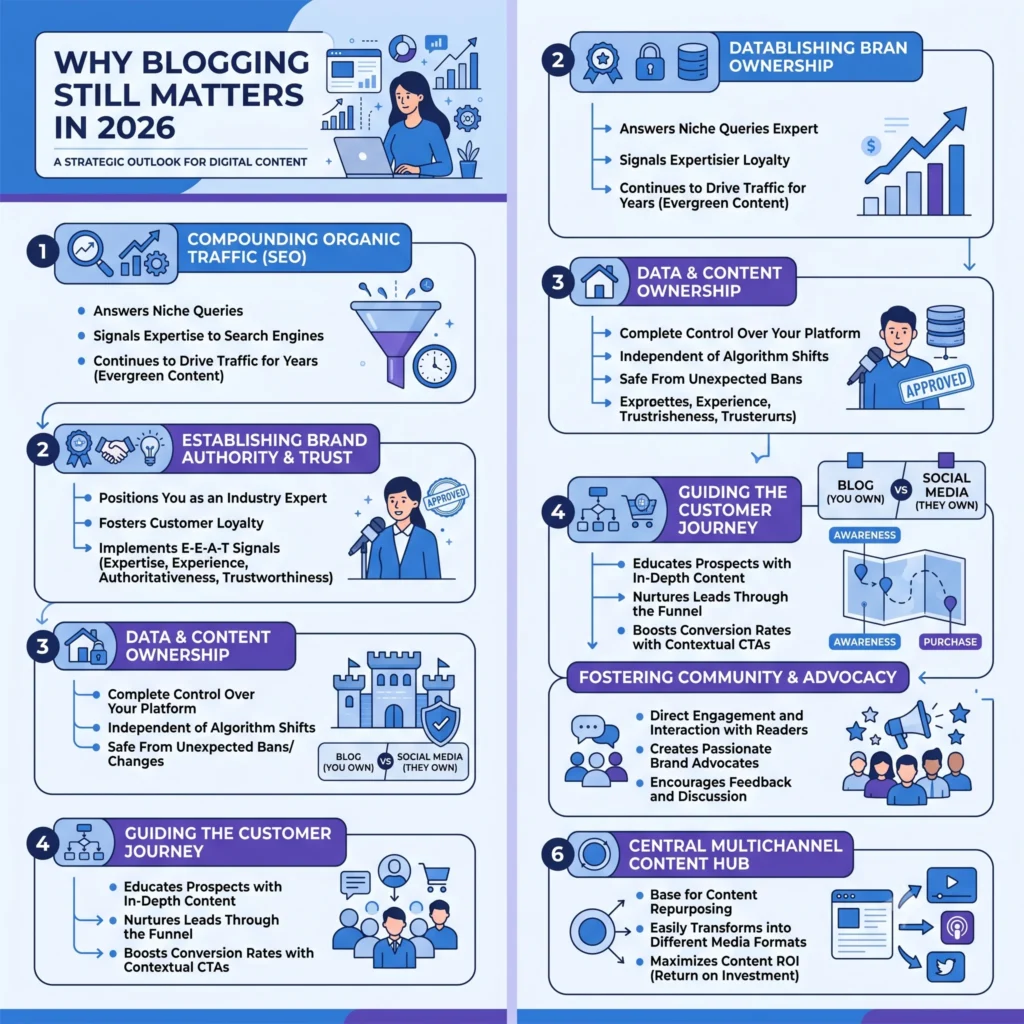
A common question people ask is: is blogging still worth it in 2026? The short answer is yes — but the why has changed.
Search behavior has shifted. People now get answers from Google Search, AI Overviews, ChatGPT, Gemini, and Perplexity. That means blogs that offer generic, thin content struggle, while blogs built on real experience, clear structure, and genuine expertise are quoted, cited, and ranked more often.
Blogging still matters because it lets you:
- Build a searchable, owned platform that isn’t controlled by a social algorithm
- Establish EEAT (Experience, Expertise, Authoritativeness, Trustworthiness) in your niche
- Create evergreen content that keeps attracting organic traffic for years
- Build an email list and audience you actually own
- Generate income through ads, products, services, or affiliate marketing
In short, blogging in 2026 rewards depth and authenticity over volume. That’s good news for anyone willing to write genuinely useful content.
How to Start a Blog Successfully

Learning how to start a successful blog starts with a few foundational decisions. Here’s the practical path:
- Pick a blogging platform. WordPress powers a huge share of the web because it’s flexible and scalable — most beginners start with a WordPress blog. Other options include Medium and Substack, which are great for writers who want simplicity and built-in audiences.
- Choose a domain name. Keep it short, memorable, and easy to spell.
- Get hosting. Reliable hosting affects site speed, which affects Core Web Vitals and Page Experience — both ranking factors.
- Install essential plugins. If you’re on WordPress, tools like Yoast SEO or Rank Math help you optimize your website for search engines. If you’re unfamiliar with SEO, start with our Beginner’s Guide to SEO before moving on to advanced optimization.
- Plan your first 10 posts before you publish. Starting with a content plan prevents the common “I don’t know what to write” freeze after post three.
This is one of the most important blogging tips for beginners: don’t wait for a perfect setup. A simple, functional blog that publishes consistently beats a beautifully designed blog that never ships content.
Choose the Right Blog Niche
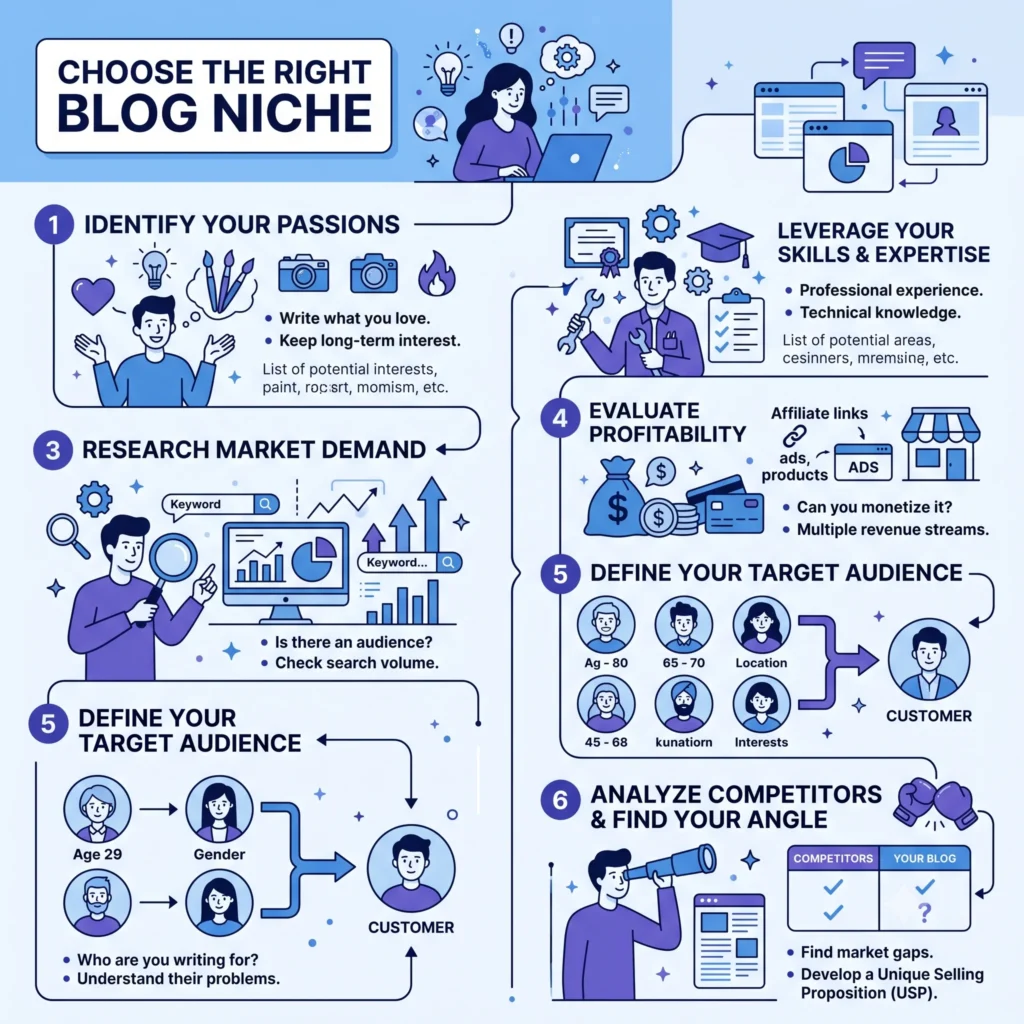
Your blog niche is the foundation everything else is built on. A niche that’s too broad makes it hard to build topical authority; a niche that’s too narrow can limit growth.
To choose a strong niche:
- Pick a topic you can write about consistently for years, not weeks
- Validate demand using keyword research tools like Ahrefs or Semrush
- Check if the niche has monetization potential (products, services, affiliates, ads)
- Look for a search intent gap — topics where existing content is outdated, shallow, or confusing
A focused niche also makes SEO easier, because search engines increasingly reward sites that demonstrate deep, consistent expertise in one area rather than scattered coverage across unrelated topics.
Create Content Your Audience Wants

Understanding your blog audience is more important than any writing technique. Before you write a single post, ask: what problem is this reader trying to solve?
Practical ways to identify what your audience wants:
- Search your topic on Google and study the “People Also Ask” boxes
- Browse relevant threads on Reddit to see real questions people ask
- Check comments on competitor blogs and LinkedIn posts in your niche
- Use keyword research to find high-intent, low-competition topics
Strong content creation always starts with the reader’s problem, not your product. Solve readers’ problems clearly, and traffic and trust tend to follow naturally.
SEO Blogging Tips to Rank Higher on Google
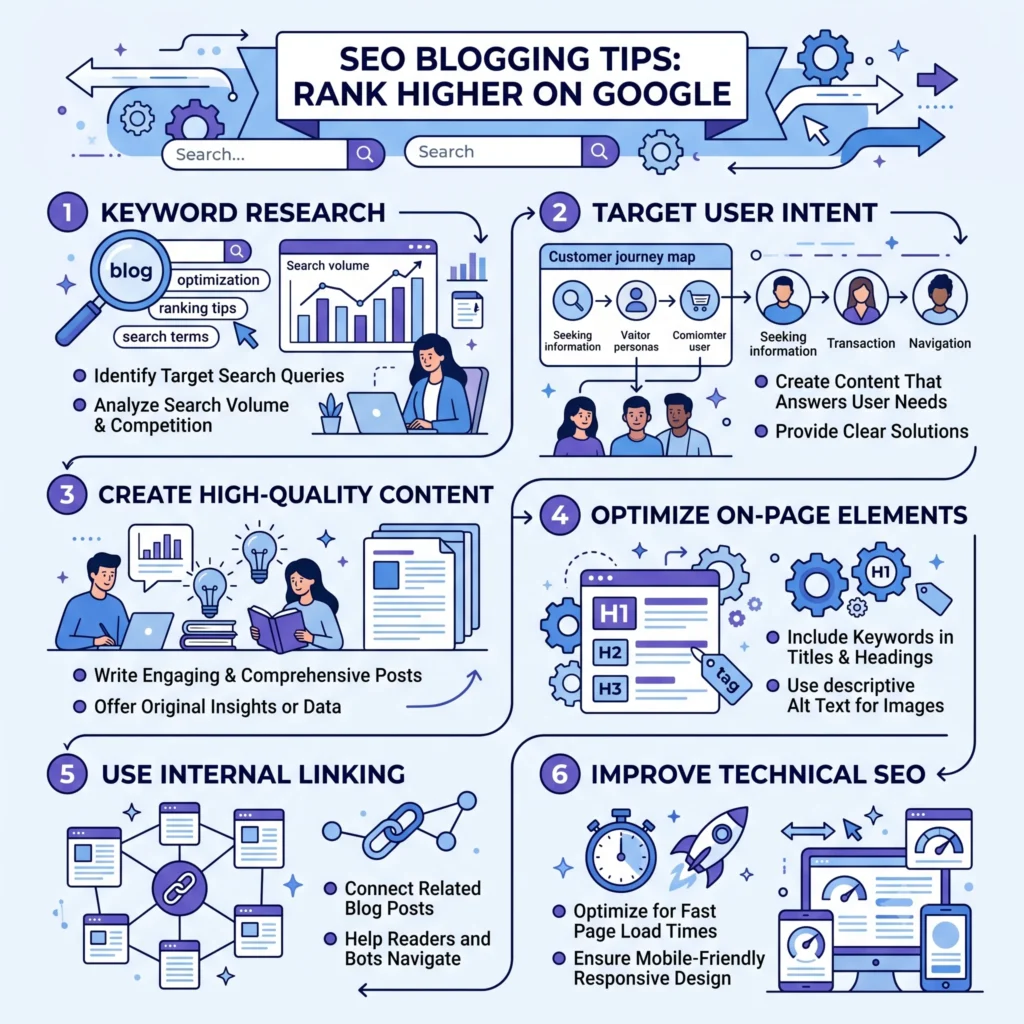
Search engine optimization is where a lot of bloggers get stuck. If you’re just getting started, learning the SEO fundamentals first will make every blogging strategy more effective. Here are the SEO blogging fundamentals that consistently move the needle.
On-Page SEO Basics
- Use your focus keyword naturally in the title, first paragraph, at least one H2, one H3, and the meta description
- Write for search intent first — match what the searcher actually wants (information, comparison, or a solution)
- Use short, descriptive URLs and optimized image alt text
Keyword Research
Effective keyword research isn’t about stuffing keywords — it’s about understanding the language your audience actually uses. Tools like Ahrefs, Semrush, and Google Search Console help you find real search terms with achievable competition.
Internal and External Linking
- Use internal linking to connect related posts and help Google understand your site structure. Learn more about this strategy in our SEO Basics guide.
- Add relevant external links to authoritative sources to support your claims and build trust
- Pursue guest blogging and backlinks from reputable sites to strengthen domain authority
Technical SEO
Fast-loading pages, mobile-friendliness, and strong Core Web Vitals all affect how Google evaluates Page Experience. A technically healthy blog ranks more easily, even with the same content quality as a slower competitor.
For deeper technical guidance, Google’s own Search Central documentation is one of the most reliable free resources for understanding how Google actually evaluates and ranks content.
Writing Tips for Better Blog Posts
If you’re wondering how to write better blog posts, focus less on “sounding smart” and more on being clear. These blog writing tips apply to every niche:
- Write compelling headlines that promise a specific, believable benefit
- Open with a hook that speaks directly to the reader’s problem
- Use short paragraphs, bullet points, and subheadings to improve blog readability
- Write in an active voice and avoid unnecessary jargon
- Back up claims with data, examples, or personal experience — this strengthens EEAT
- Edit ruthlessly; a tool like Grammarly can catch clarity and grammar issues before you publish
A helpful trick: read your draft out loud. If it sounds stiff or robotic when spoken, it will read that way too.
Blog Design and User Experience Tips
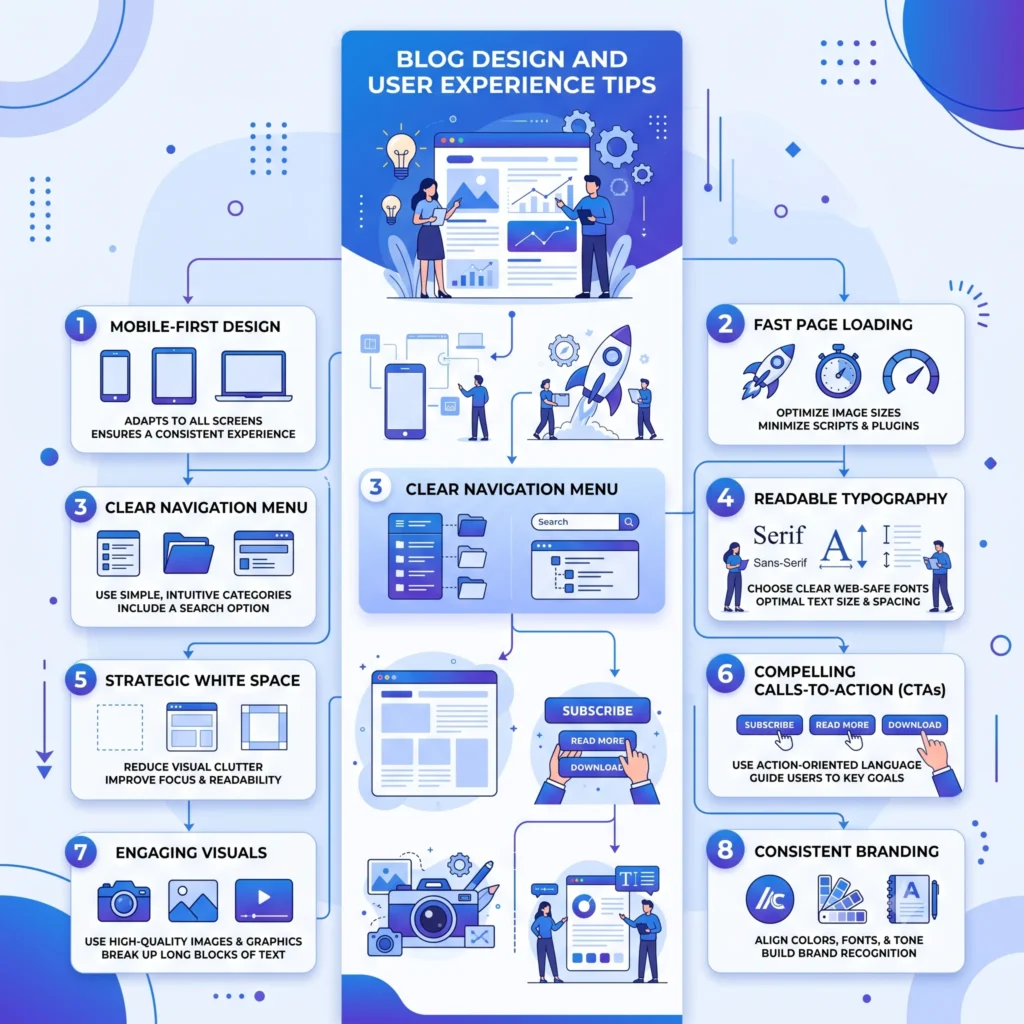
Design isn’t just decoration — it directly affects user engagement and how long visitors stay on your site.
- Use a clean, uncluttered layout with plenty of white space
- Choose readable fonts and a mobile-responsive theme
- Keep navigation simple so readers can easily find related content
- Use custom graphics from tools like Canva to make posts more visually engaging
- Optimize page speed — slow sites hurt both rankings and reader patience
Good design quietly supports SEO. A site that’s easy and pleasant to use naturally earns lower bounce rates and higher reader engagement, both signals that align with strong Page Experience.
How to Promote Your Blog and Grow Traffic

Publishing is only half the job. If you’re asking how to get traffic to a blog, promotion has to become part of your routine, not an afterthought.
Effective blog promotion channels include:
- Social media marketing on platforms like Facebook, X (Twitter), Pinterest, and LinkedIn, matched to where your audience actually spends time
- Guest blogging on established sites in your niche to earn backlinks and exposure
- Repurposing blog posts into shorter content for content distribution across multiple channels
- Answering questions on Reddit and niche forums, linking back where genuinely relevant
- Building relationships within a blogging community through comments, collaborations, and networking
Consistency compounds. A blogger who promotes each post across two or three channels every single time will outgrow one who posts brilliant content but never shares it.
How to Build an Email List
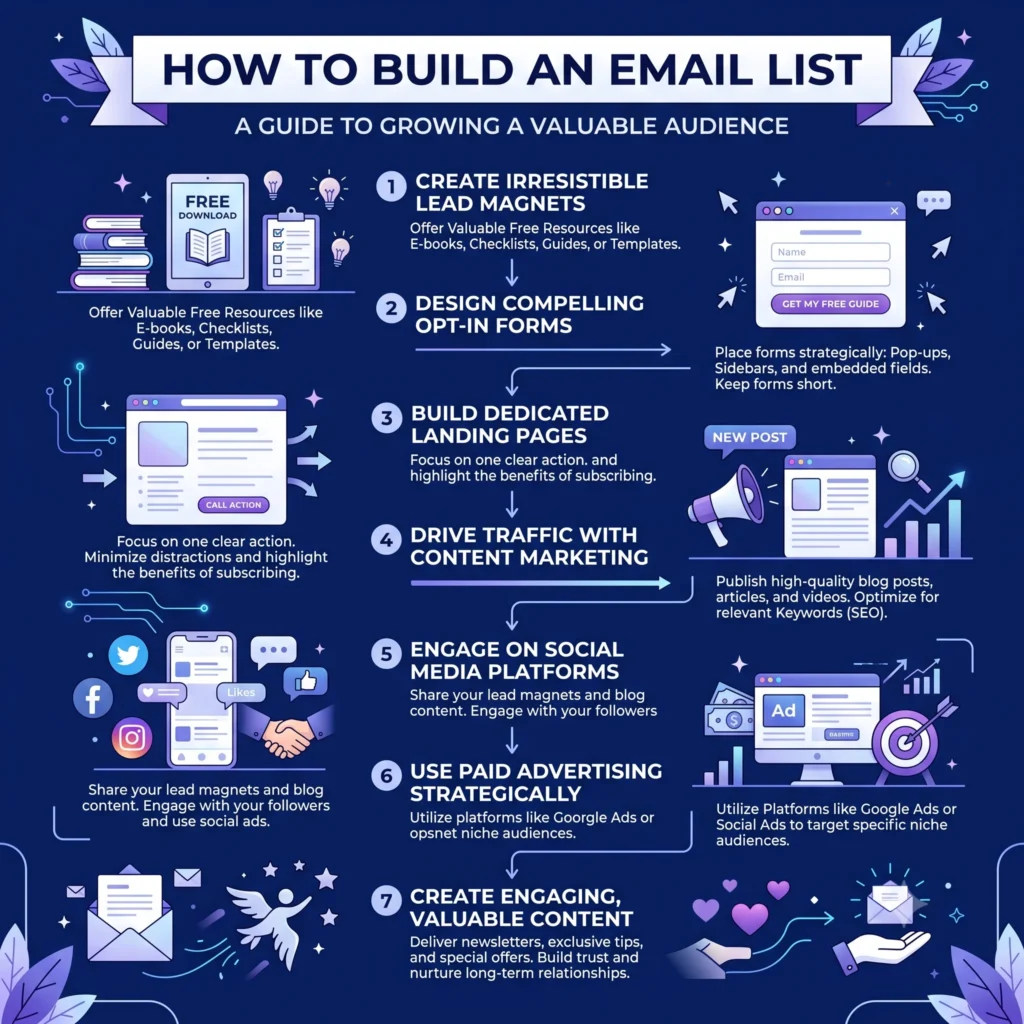
If you want to know how to build an email list from a blog, start early — don’t wait until you have “enough” traffic.
Steps to grow email subscribers:
- Choose an email marketing platform like Mailchimp or ConvertKit
- Offer a genuinely useful lead magnet (checklist, template, mini-guide)
- Place signup forms strategically — after high-value posts, in the sidebar, and as a gentle exit-intent popup
- Send consistent, valuable emails, not just promotional pitches
- Segment your list over time based on interests and engagement
An email list is one of the few assets in digital marketing you fully own. Unlike social platforms, no algorithm change can take it away from you — which makes it central to any long-term blog content strategy.
How to Monetize Your Blog

Understanding how to monetize a blog successfully means recognizing that monetization should follow value, not replace it.
Common blog monetization methods:
- Display advertising through ad networks once traffic reaches a meaningful threshold
- Affiliate marketing — recommending products or tools you genuinely trust
- Digital products like ebooks, courses, or templates
- Sponsored content and brand partnerships within your niche
- Services or coaching built on the authority your blog establishes
- Membership or subscription content via platforms like Substack
The most sustainable approach usually combines two or three of these rather than relying on one. And for blogging tips for affiliate marketing specifically: only recommend products you’ve used or thoroughly researched. Trust, once broken, is hard to earn back.
Common Blogging Mistakes to Avoid
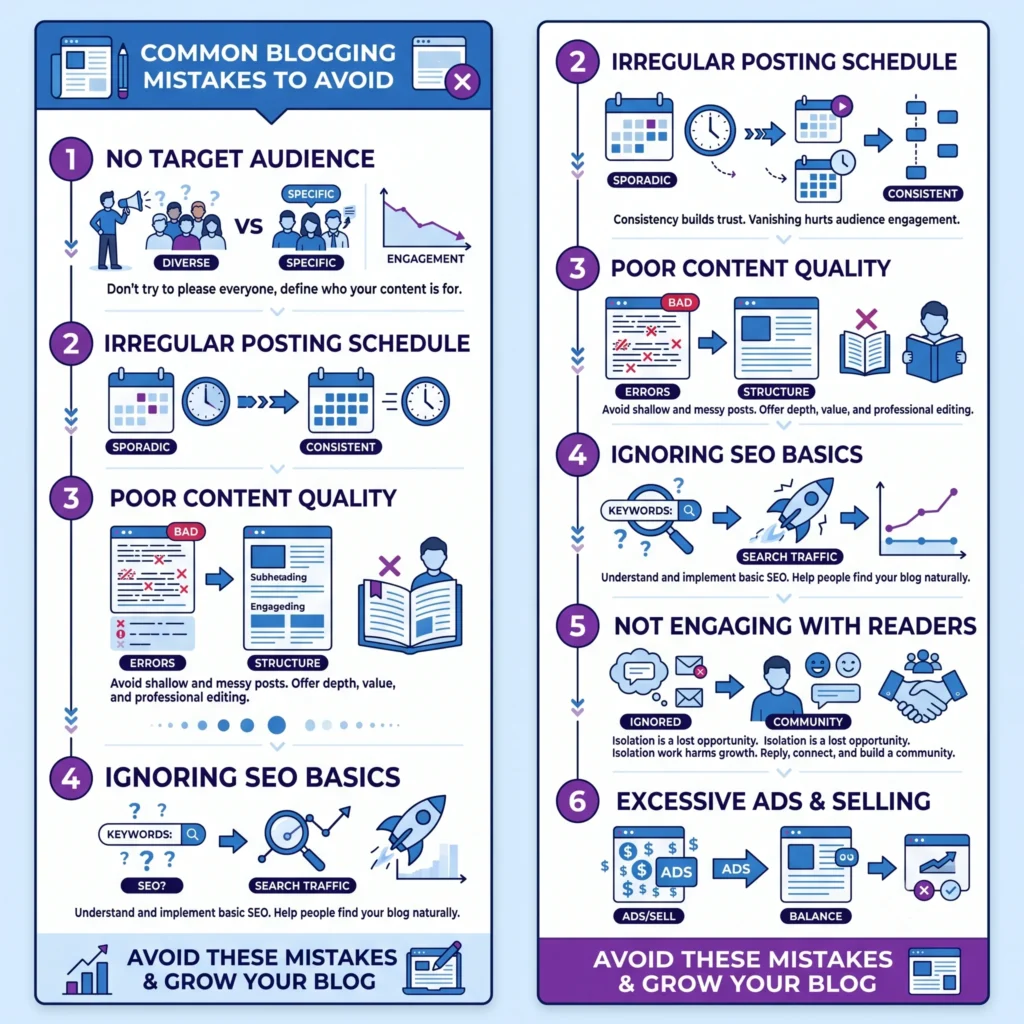
Knowing common blogging mistakes to avoid can save you months of wasted effort:
- Inconsistent publishing — readers and Google both reward consistency over sporadic bursts
- Ignoring SEO basics like keyword research and meta descriptions
- Writing for yourself instead of your audience
- Neglecting mobile users and page speed
- Skipping analytics and never learning what’s actually working
- Copying competitors’ content instead of adding a unique angle or experience
- Giving up too early — most blogs take 6–12 months of consistent effort before real traction
Avoiding these mistakes is often more impactful than chasing the latest growth hack.
Essential Blogging Tools
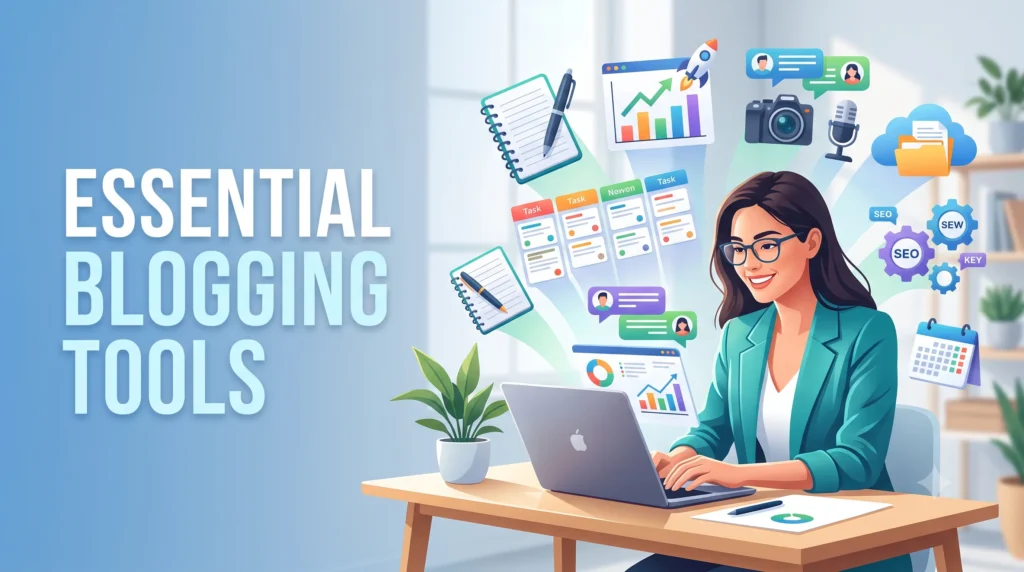
The right blogging tools save time and improve quality across every stage of your workflow:
| Purpose | Tools |
| Writing platform | WordPress, Medium, Substack |
| SEO plugins | Yoast SEO, Rank Math |
| Keyword & competitor research | Ahrefs, Semrush |
| Analytics | Google Analytics, Google Search Console |
| Writing & editing | Grammarly, ChatGPT |
| Design | Canva |
| Note-taking & planning | Evernote |
| Email marketing | Mailchimp, ConvertKit |
Using tools like Ahrefs’ blogging and SEO resources or Semrush’s content marketing guides can help you go deeper into keyword research and competitive analysis as your blog matures.
Blogging Tips Checklist
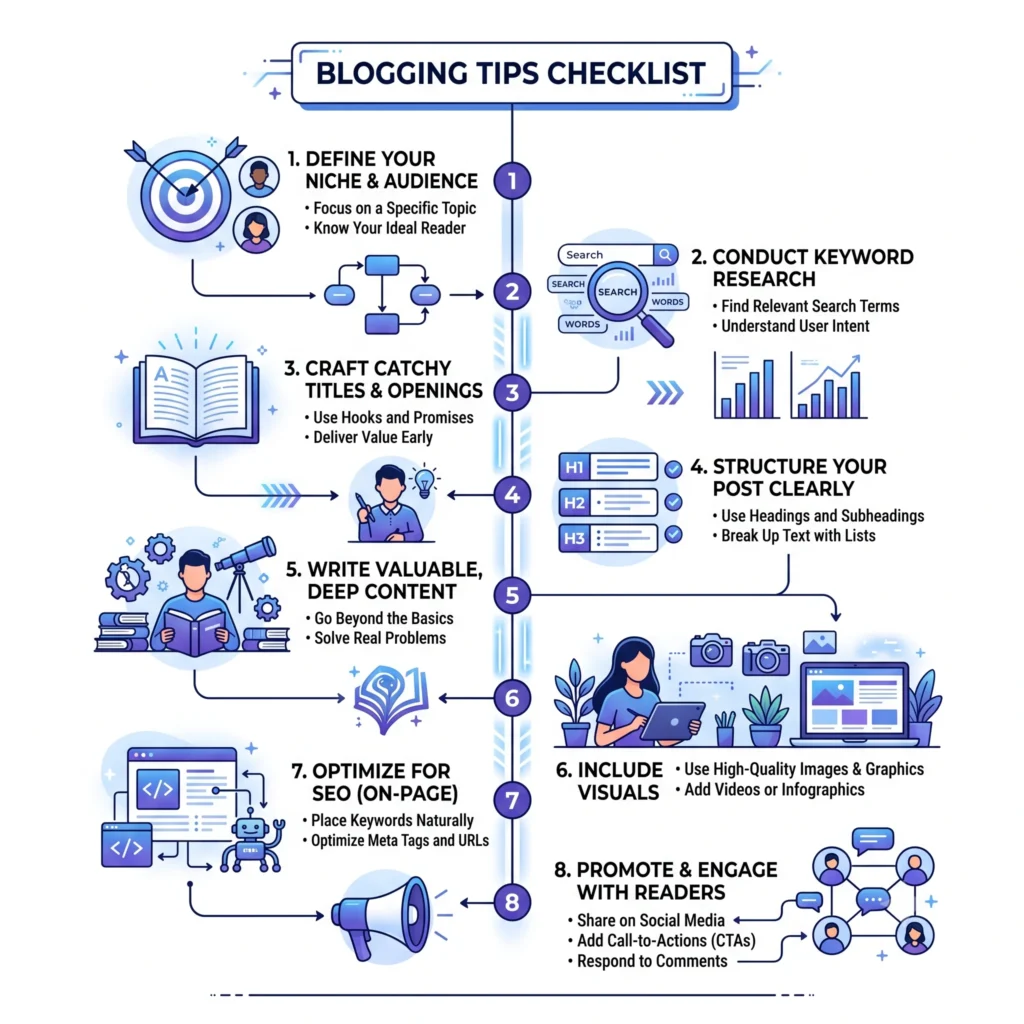
A quick-reference blogging tips checklist to keep you on track:
- Chosen a focused, sustainable blog niche
- Set up a blog on a reliable platform (e.g., WordPress)
- Completed keyword research before writing
- Written a compelling, keyword-optimized headline
- Structured the post with clear H2s and H3s
- Added relevant internal and external links
- Optimized meta title and meta description
- Included a call-to-action for email signup
- Checked page speed and mobile responsiveness
- Promoted the post across at least 2–3 channels
- Tracked performance in Google Analytics and Search Console
Final Thoughts
At its core, blogging tips all point back to the same principle: create genuinely helpful content, structure it clearly, optimize it thoughtfully, and promote it consistently. There’s no single hack that replaces showing up, writing honestly, and improving with every post.
Whether you’re just learning how to start a successful blog or refining an established one, building a strong foundation with SEO Basics will help you get more value from every blogging strategy covered in this guide.
Start small, stay consistent, and let your expertise show. That’s the real secret behind every list of “blogging success tips” you’ll ever read.
Frequently Asked Questions About Blogging Tips
How to be good at blogging?
Publish helpful, original content consistently, optimize for SEO, and focus on solving your audience’s problems.
How to get 1000 views on Blogger?
Create SEO-friendly posts, target low-competition keywords, share on social media, and publish consistently to grow traffic.
Can I earn $1000 from blogging?
Yes, many bloggers earn $1,000 or more per month through ads, affiliate marketing, sponsored posts, and selling digital products.
How to make a really good blog?
Choose a focused niche, write valuable content, optimize for SEO, and provide a fast, user-friendly experience.
Do blogs earn money?
Yes, blogs can generate income through advertising, affiliate marketing, sponsored content, online courses, and digital or physical products.

FluxSEO’s Team creates practical, beginner-friendly guides on SEO, blogging, keyword research and digital growth. Our goal is to simplify search engine optimization and help website owners improve visibility, rankings and organic traffic with clear, actionable advice.